
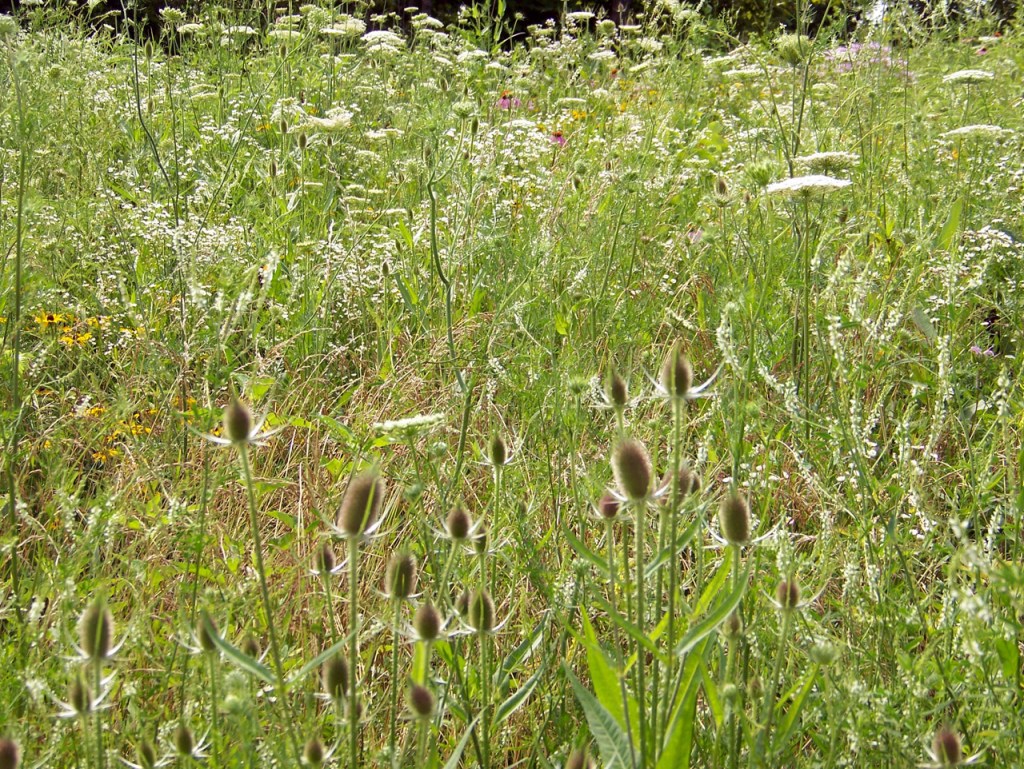
In regenerative agriculture, understanding weeds as indicators of healthy soil can completely change how farmers interpret what is happening in their fields, turning what looks like competition into valuable ecological information.
In part one of this series, it was established that weeds are ecological indicators, that plants respond to conditions rather than create them (however, it can go both ways, i.e., microclimates). This article takes that idea somewhere most farmers do not expect. Some of the weeds you work hardest to remove are sending you a message—they are growing precisely because your soil is doing well.
Some plants prefer compacted soils. Others thrive in waterlogged conditions. A few thrive on growing in nutrient-deficient substrates. But there is another class of plant we tend to ignore: the weeds of abundance.
Essentially, they are endorsing the situation while also pointing out that there is still an unaddressed gap in your crop’s growth cycle.
Pigweed (Amaranthus spp.) is one of the clearest examples. Cornell’s weed ecologists describe pigweeds as nitrophilous: they thrive in conditions favorable to nitrogen.1 I have pulled more pigweed than I can count, and its arrival almost always confirms something went right, not wrong. If you get a flush of pigweed after cultivating or fertilizing, you have nitrogen and phosphorus available. If you have exposed bare soil, your crop wasn’t fast enough to take root and flush out. This is about timing, not fertility.
Lamb’s Quarters (Chenopodium album) is sensitive to nitrogen and rapidly colonizes fertile tillage.2 I’ve struggled for years to control a thick patch of lamb’s quarters growing among my beds, but I certainly ate well.
Purslane (Portulaca oleracea) is one of the plants that fill in the blanks. First, it’s a wonderful, nutritious edible. It establishes readily on fertile, sunny, disturbed ground.3 It is among the fastest to colonize a freshly cultivated bed where nutrients are plentiful, and competition is limited. Once I realized how much purslane has to offer, I stopped fighting it and began managing it. You will see how its culinary and medicinal history across dozens of cultures is a story for Part 4 of this series, and it is worth the wait.
When all three of these plants appear together after tillage or a fertility cycle, the indicators are consistent: the soil behaves as fertile soil does. Yet, the cash crop was simply slower to the table.
Fertility is not the same as management, however, and none of this means that farmers should ignore these plants. Yield depression can occur in a field full of pigweed or lamb’s quarters, as they take away available light, water, and nutrients from your intended crop.
This informs management, not fertility; you don’t let your farm become overtaken by pigweed or lamb’s quarters. Too many of these weeds will still rob your crops of sunlight, water, and nutrients. But when you see flushes of weeds that you know love fertility above all else, you can rest assured that your soil is healthy and that your crop canopy closed too slowly.
We, humans, tend to complicate things; nine times out of ten, it’s not about adding more inputs to the soil. It’s about timing, spacing, mulching, or weed prevention to help your crop establish more quickly.
Together, these three plant species verify that fertility is present and simultaneously indicate when to apply those fertility inputs.
Some plants appear because the soil is struggling. Others indicate that conditions are aligned.
Just as in life, we do not all speak the same language, but there are universal cues that allow us to understand each other. The same is true with nature. These plants are part of a larger message — not problems to be solved, but signals worth reading. Read them correctly, and you stop reacting and start managing. The field does not need more inputs. It needs your attention.
- Mohler, C. L., Teasdale, J. R., & DiTommaso, A. (2021). Pigweeds. In Manage weeds on your farm: A guide to ecological strategies. SARE / Cornell University. ↩︎
- Mohler, C. L., et al. (2021). Common lambsquarters. In Manage weeds on your farm: A guide to ecological strategies. SARE / Cornell University. ↩︎
- University of Illinois Extension. Common purslane. https://hyg.ipm.illinois.edu/article.php?id=1252 ↩︎
This article is adapted from a longer original essay by Andrew Gerren, published on Sacred Herbs and Botanicals. You can read the full version here.
This piece is part of the Reading the Landscape mini-series by Foodscapes Collective, which explores how plants, soil, and ecological patterns reveal information about land health. Explore the full series here: (coming soon)
For a practical field reference of indicator plants and what they may suggest in tropical, subtropical, and temperate systems, visit: Weed Indicator Field Guide
Photo courtesy of David Wagner

Andrew Gerren
Andrew Gerren is a farmer, ethnobotanist, and sustainable agriculture consultant with 17+ years of tropical farming experience and over a decade in plant medicine. Trained at the University of Hawai‘i at Mānoa, he specializes in soil health and regenerative systems tailored to local microclimates. He is a Returned Peace Corps Volunteer where he worked with smallholder farmers in Jamaica. He previously managed Newfield Farm in Florida and currently manages a 10+ acre plot for a private residential community. Andrew now runs Sacred Herbs & Botanicals and Incredible Foodscapes, advancing resilient, community-based food systems.

Joel Matheson
Joel Matheson is co-founder of The Foodscapes Collective and is passionate about sustainable agriculture, food security, and climate resilience. He holds an MA in Global Studies and a BA in Environmental Studies. He was a Peace Corps volunteer in Jamaica and Nepal.
Want more content like this? Subscribe to The Foodscapes Collective to be the first to know about articles like this and more.






Leave a comment