
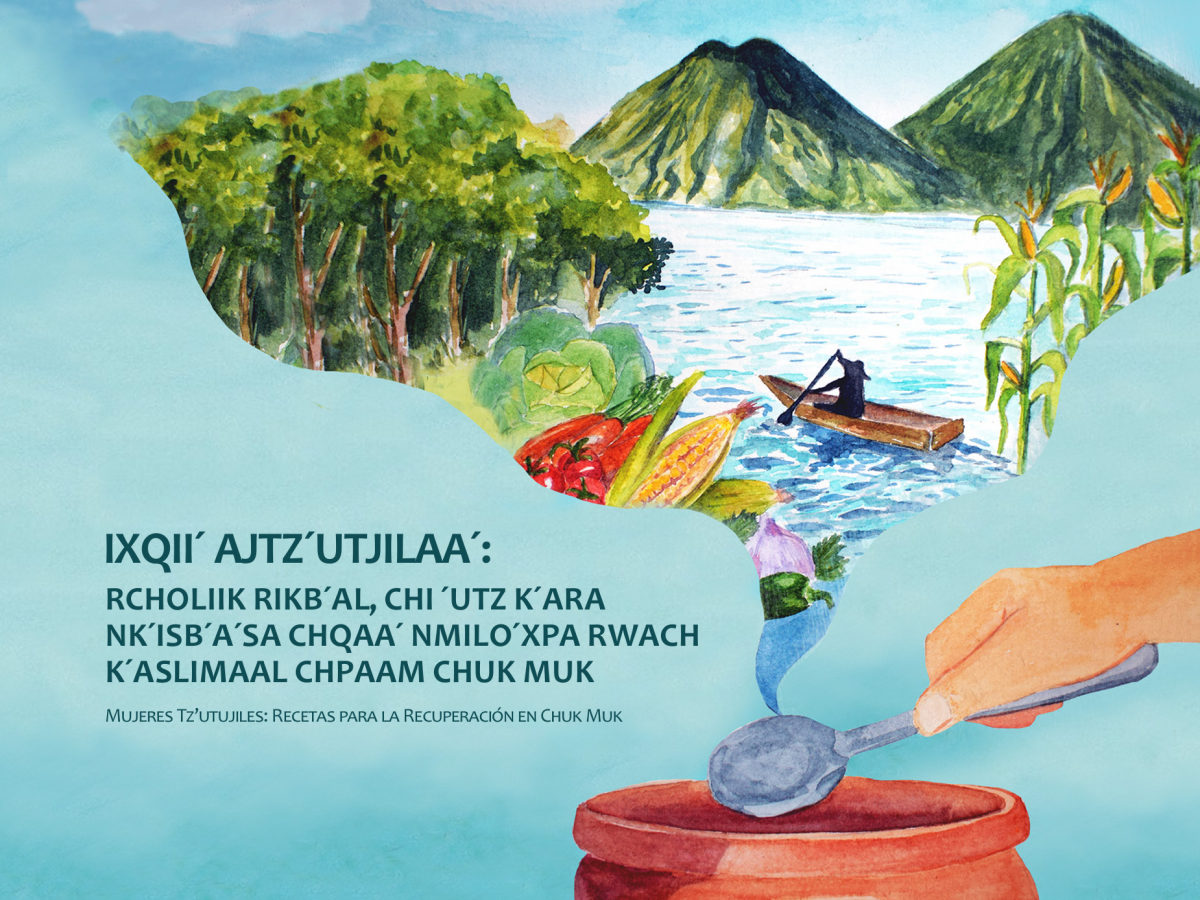
Mujeres Tz’utujiles: Recetas para la Recuperación en Chuk Muk is much more than a cookbook. It reminds us that every recipe carries a history. It shows how preserving traditional foodways can help displaced communities recover their culture and strengthen their sense of identity. Even in a new environment, food reconnects you to home.
Produced through the Recipes for Recovery project, part of the larger Ixchel research and development initiative based at the University of Edinburgh, this beautifully crafted cookbook brings together traditional Tz’utujil recipes from an Indigenous Maya community in Guatemala. (Download the cookbook here.)
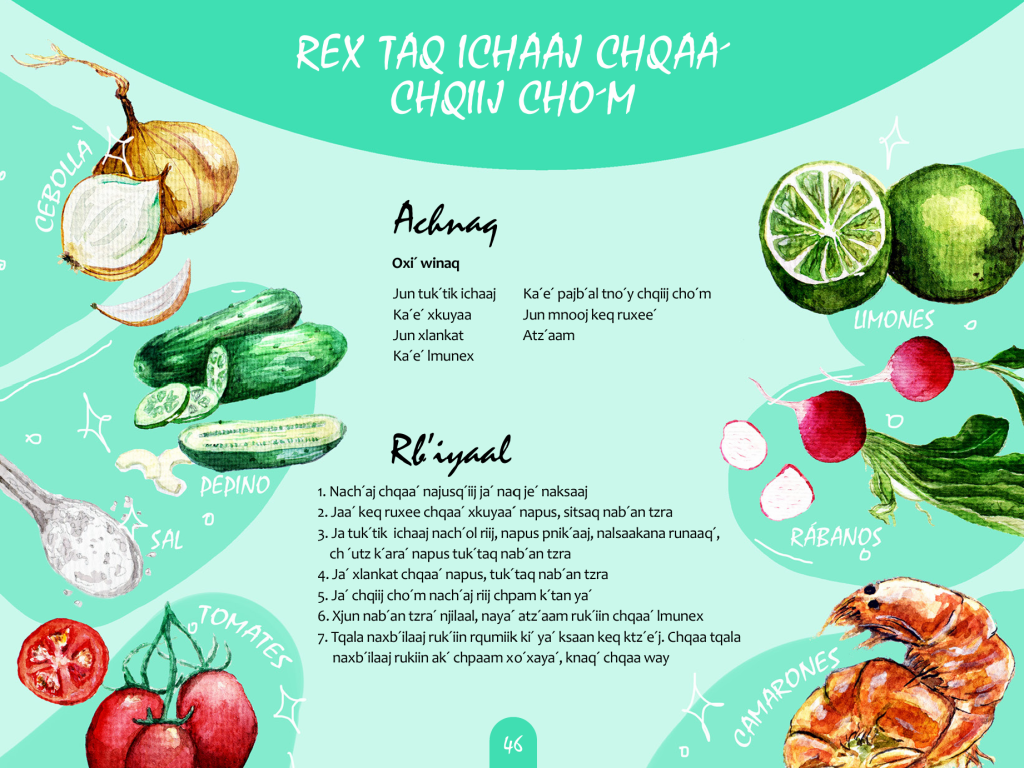
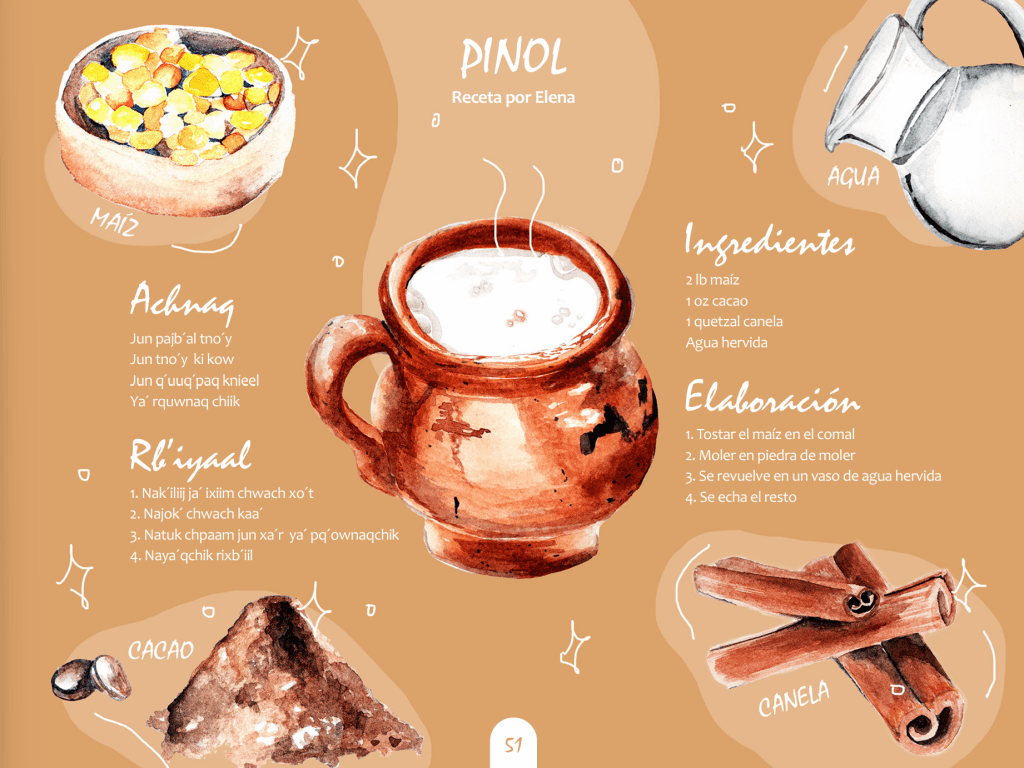
Accompanied by vibrant watercolor illustrations, the cookbook captures not only the flavors of Tz’utujil cuisine but also the warmth behind each dish. At its heart, the cookbook is a celebration of Tz’utujil Maya women, with every recipe reflecting generations of knowledge passed from mothers and grandmothers to daughters.
One of the cookbook’s most distinctive features is its multilingual presentation. Rather than publishing separate Spanish and Tz’utujil editions, Mujeres Tz’utujiles weaves both languages throughout its pages, with each recipe presented in Tz’utujil Mayan and then Spanish.
For English-speaking readers, the language may present a challenge, but it is far from a barrier. Modern translation tools make it possible to work through the Spanish recipes, opening the door to recreating traditional Tz’utujil dishes at home.
The cookbook preserves indigenous language alongside indigenous food traditions, reinforcing the idea that recipes carry more than just instructions. This approach not only makes it accessible to different readers within the community, but also celebrates the continued use of Tz’utujil as a living language.
Mujeres Tz’utujiles is also a testament to the role that ancestral knowledge plays in rebuilding communities after displacement.
The recipes collected here emerge from Chuk Muk, a government-built resettlement village in Guatemala established for Maya families displaced by the devastating 2005 Panabaj landslide caused by Hurricane Stan. While the relocation provided housing, it fundamentally altered everyday life.
Families accustomed to farming larger plots and gathering food from the surrounding environment suddenly found themselves confined to small residential lots with only modest space for gardens. Although much had changed, their recipes traveled with them, preserving their connection to the place they once called home.
Recovery involves more than rebuilding homes. It also means recovering the traditions that give a community a sense of belonging. Every recipe reflects the relationship between people, place, and culture.
This perspective makes the cookbook feel refreshingly different from many publications on resilience or disaster recovery. It demonstrates that everyday acts, such as preparing a family meal, can be just as important to rebuilding a community.
Mujeres Tz’utujiles also stands apart from many modern cookbooks because it reflects an oral cooking tradition. Rather than relying on precise measurements, the recipes capture knowledge built over years of practice, where the women instinctively know how long a dish should simmer, how much firewood is needed, or when to gather fresh herbs so that a meal is ready at just the right time.
These techniques are learned through observation and passed from one generation to the next. In preserving these recipes, the cookbook also preserves the knowledge and practices that have shaped Tz’utujil cooking for generations.
At The Foodscapes Collective, we believe that food carries the stories that often go untold. It reveals how communities adapt to change and how knowledge is passed down through generations. Food facilitates connections to place and identity, and Mujeres Tz’utujiles is a powerful example of this.
While the cookbook is rooted in one Tz’utujil Maya community in Guatemala, its lessons reach much further. Around the world, communities facing displacement continue to recover their cultures through shared meals. This cookbook reminds us that these everyday practices are not simply traditions—they are forms of resilience.
For readers willing to cross the language barrier, it offers not only the chance to recreate traditional Tz’utujil dishes but also to appreciate the traditions that have sustained a community through generations.
That is what makes Mujeres Tz’utujiles worth reading. Beyond its watercolor illustrations and thoughtfully presented recipes, it is a celebration of living food traditions and the women who continue to keep them alive.
Download the cookbook here.

Joel Matheson
Joel Matheson is co-founder of The Foodscapes Collective and is passionate about sustainable agriculture, food security, and climate resilience. He holds an MA in Global Studies and a BA in Environmental Studies. He was a Peace Corps volunteer in Jamaica and Nepal.
Want more content like this? Subscribe to The Foodscapes Collective to be the first to know about articles like this and more.



Leave a Reply