Name: Leonor Rojas Murcía
Location: San José del Fragua, Caquetá, Colombia
Type of Farming: Cacao, vegetable garden, mixed-crop system
Years farming: 20 years
This article was originally published in Spanish, para leer lo en español, haz clic aqui.
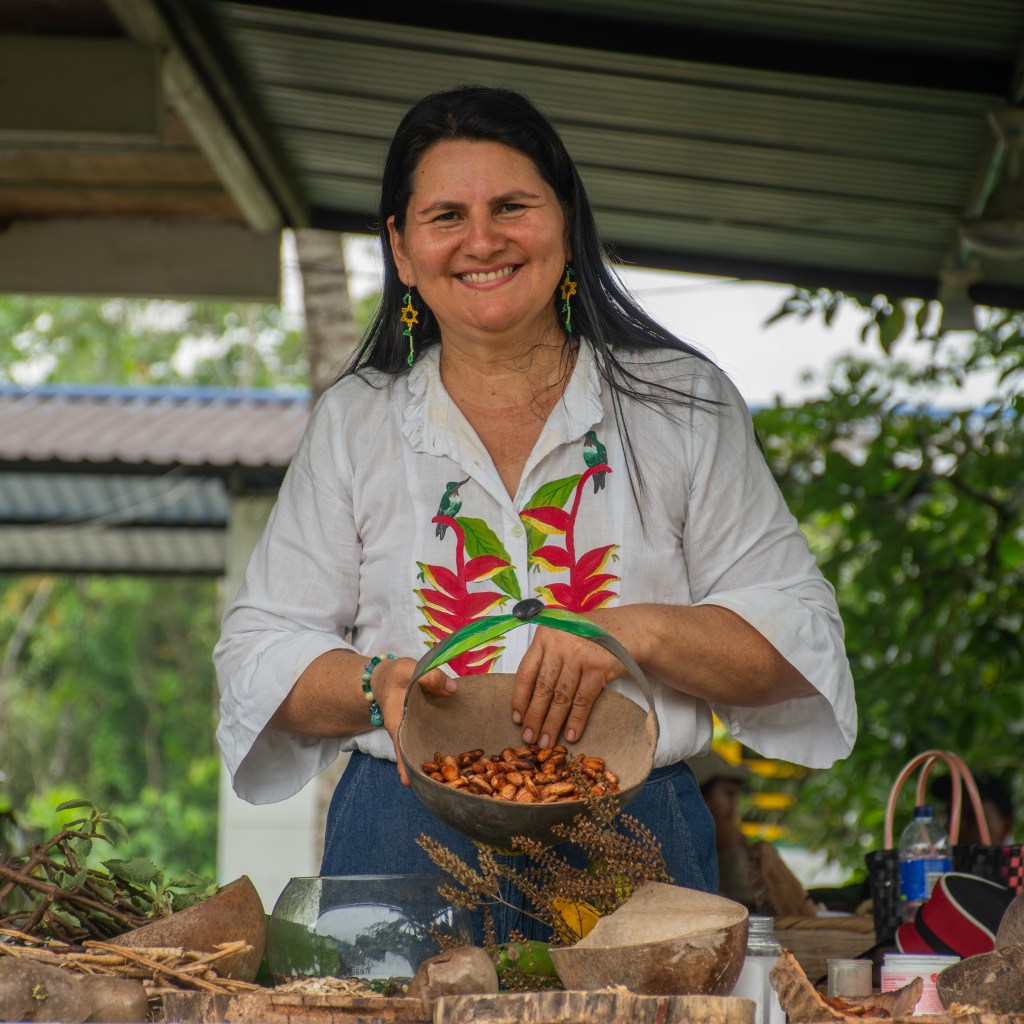
Leonor Rojas Murcía is 52 years old and is a farmer from San José del Fragua, Colombia. From a young age, she learned farming by watching her father as they grew plantain, corn, rice, and cacao. From him she inherited not only the knowledge, but also a love for the land.
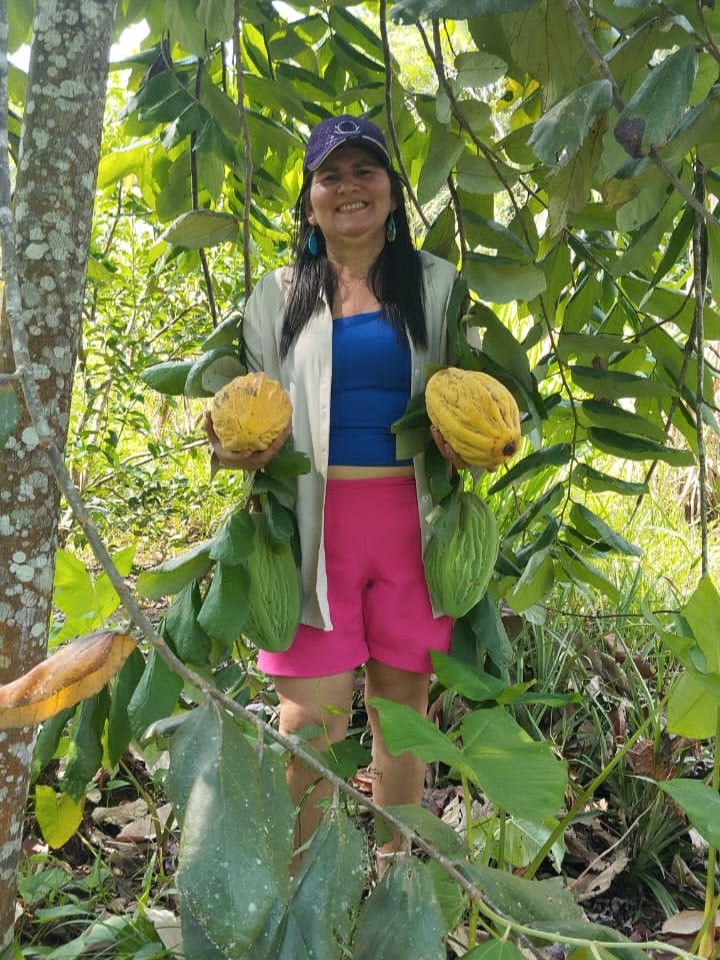
Today, Leonor works on a seven-hectare farm that she transformed from pastureland into a diverse agricultural system, where she grows cacao, fruit trees, vegetables, and aromatic and medicinal plants. This space not only sustains her family daily, but has also allowed birds and mammals to return, signaling the recovery of local biodiversity. For her, cacao is much more than a crop, it is memory, heritage, and hope, “cacao is the memory of my father and represents a sweet life, calm, healing, and livelihood.”
Leonor is part of the association ASOACASAN, which brings together 62 cacao-producing families. The association has the support of WWF Colombia, which through the Amazonian Cacao and Peace initiative provides technical guidance on biodiversity conservation and promotes agroforestry management. Cacao has become an alternative path toward building peace.
“For us, growing cacao is not just an economic or environmental decision; it is a way of living in peace and contributing to our communities.” For the farmers of San José del Fragua, dedicating themselves to cacao cultivation is more than an environmental or economic decision; it also brings peace and tranquility to their communities.
ASOACASAN was originally created in response to the lack of secure economic opportunities in the region. At the time, the fumigation of illicit crops, mainly coca, endangered some farmers, who found themselves threatened by the presence of illegal armed groups that were recruiting young people.
In her day-to-day life, Leonor combines work on her farm with her role as a community leader. She is president of the Transformation Committee, made up of 12 women, and a board member of ASOACASAN’s Board of Directors. She rises early to walk through her fields, tends to her plants, and selects seeds, working to build a seed bank she hopes to one day share with other farmers.
“I want people to come, exchange seeds, and discover what belongs to us,” she explains. In her home and on her farm, she keeps several jars and bowls in which she stores seeds she has been collecting since her arrival in the municipality. She hopes to establish a seed bank to exchange with other farmers and strengthen the products of the Amazon.
As a female leader in cacao processing, Leonor has found an opportunity to recognize and strengthen women’s knowledge. Together with other women, she has driven processes of empowerment, quality, and traceability, proving that women can participate in every stage: from planting to selling.
“We are closing gaps. Before, people thought the land was only for men, but today we show that we can grow, process, and sell.” She also invites young people to be part of this process: “Whoever grows their food knows what they’re eating. The countryside is a place to live better, breathe fresh air, and create opportunities.”
Cacao cultivation represented a new opportunity to foster peace, with children, women, and men working together. Cacao can also help restore degraded soils and remain productive for up to 30 years.
Likewise, ASOACASAN leads social innovations and generational integration efforts by actively involving children and young people in cacao production activities. In San José del Fragua, cacao production ensures that knowledge, practices, and values are passed down between generations.
In recognition of the International Year of the Woman Farmer, The Foodscapes Collective is highlighting women farmers whose work sustains families, communities, and food systems. This series shares the voices and experiences of women farmers through short conversations about their journeys, and the meaning of growing food.
In this farmer profile, Leonor reflects on how cultivating cacao has transformed her land, her community and bolstered the role of women in agriculture.
What first inspired you to become a farmer?
I saw that people were not growing food, and I couldn’t understand how we could have the land and not make use of it. My parents taught me to farm, and in the land you have the opportunity to harvest. It was my father who inspired me to dedicate my life to the land.
Today, I love my land. Through the organizations, I have had the opportunity to learn about places where violence once took place and where the territory has been rebuilt from that point, and I would love to implement that where I live.
For me, living here means being faithful to the land where I was born, and being a daughter who does not abandon her roots. This land is fed by crystal-clear waters and rich with forest, and that is the true wealth we are called to protect and respect.
Cacao is a commitment my family has made. My father planted cacao, and now I watch the work within the association with hope.
Where did yo learn to farm?
Watching my father.
I grow cacao in memory of my father. He was a farmer, he had plantain, corn, rice and cacao. We would bring the plantains to feed the pigs and we would find those trees, with those fruits (cacao), and we would pick them. We would split them open like a sweet,and that sweetness became the joy of my childhood.
Growing up, we always had plenty of food, even if shoes and clothes were hard to come by, but we never felt the lack of them. We were happy, we walked barefoot and in light clothing. So cacao was more about enjoying and savoring that sweetness. We would bring the seeds and lay them out in the sun and take them to the store but they would not buy them. They would give us a few coins and some bills, and with that we would buy shoes.
What does a typical day on your farm look like?
I am currently president of the Transformation Committee, made up of 12 women, and a board member of the ASOACASAN Board of Directors. On my farm I have the products that we process and I am in charge of selling them. I enjoy offering the products and we restock them every so often. I think I learned that from my father because he was a trader of cattle and pigs.
I wake up at 6 in the morning. On the farm I tend to the crops, I walk through them and see what they need. I also keep seeds that I come across, gradually building a seed bank. I want people to be able to come to my farm to exchange seeds and discover the products native to the region. When my father harvested he would select seeds and share them, and that is what I learned.
Cacao is teaching me that trees need to be shaped so that they can be productive too. I talk to the cacao plants so that they grow stronger, I nourish them. For me, a tree is like a child because I have to feed it so that it grows stronger over time, just like children.
I learned to prune plants because during my childhood that was just natural. Every three months we carry out pruning and nutrition care, and that has allowed me to keep it free from infection and in good health.
What challenges do you face as a woman farmer — whether related to land, financing, markets, or recognition?
As leader of the Transformation Committee, and through the empowerment work and experience-sharing I have done with other women, I came to realize that women carry their own deep knowledge. This became an opportunity to bring that knowledge together and channel it into processing the cacao.
We came together to strengthen that knowledge, improve it and bring it to a higher quality, with traceability and with the goal of producing a finished product for export.
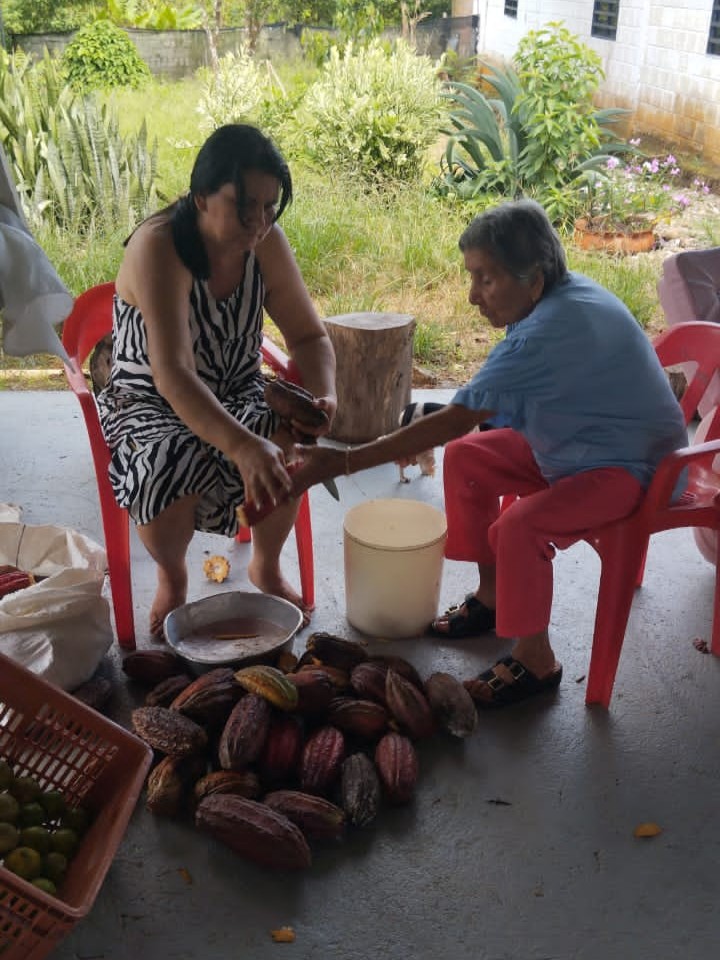
We are all leaders in our own families, and this has been our opportunity to break down barriers that once kept women off the land, where farming was seen as a man’s area. Through our organization we have shown that we can grow, work the land, process the product and sell. We are involved in every stage of the process and on the board of the association. I look at these women and I see the potential of their leadership and the abilities and knowledge they carry.
Each one of us has a role. There are those who shell the beans, those who handle the roasting, those who work with the chocolate. The tasks are not assigned but rather each one works in what she enjoys.
What does growing food mean to you? Is there a crop or product that feels especially meaningful?
Yes, cacao means sweet life, calm, healing and livelihood. Agriculture is abundance and wealth.
Just as the earth is a woman, we produce diversity. One thing the earth gives us is the seed, and without seeds we could not farm.
Cacao is a national drink and a global drink. It is consumed in many forms and if we look at history, cacao is the drink of gods.
I want people to fall in love with cacao, and for cacao to be the crop that contributes, and keeps contributing, to peace, to building community, and to caring for this land.
What advice would you give young women who want to farm?
Whoever grows their food knows what they are eating. Growing your own crops is the best thing that can happen to you, it also gives you autonomy over your food. Agriculture is profitable and is a necessity for everyone.
You should take pride and find joy in what you do on the land, so that young people can see the countryside as a place to breathe fresh air, experience something truly different, and build a good life. I invite them to see the value in what they grow and to live well from it.
What does sharing cacao mean?
Sharing cacao, say, offering a tasting, means giving a part of the essence of each woman’s being. It is gratifying, it is an immense joy. It is the happiness of knowing it was worth it and that we are certain that what we are doing transcends, and in each product we are giving a piece of our soul, a piece of our essence, a piece of our land.
At the end of the day it is the land that gives us the product to then consume it. To transform it and consume it.
What do you feel when you taste the cacao from your region?
First, there is the bean itself, that sweet, fermented scent. It fills me with happiness, it gives us joy, it brings us together, and it deepens the bonds of sisterhood we share as women. I believe we are weaving something social with this work, honoring every day the knowledge and labor each woman brings. And when we sell a product, the income we receive is a recognition of each woman’s worth and work.
What species have returned to the territory?
The fact that the forest was cleared caused many birds and mammals to disappear. One of the reasons that led me to grow cacao was also to reforest, and now the flora and fauna have increased.
Photos courtesy of Leonor Rojas Murcía
Carole Dupuy-Batkai
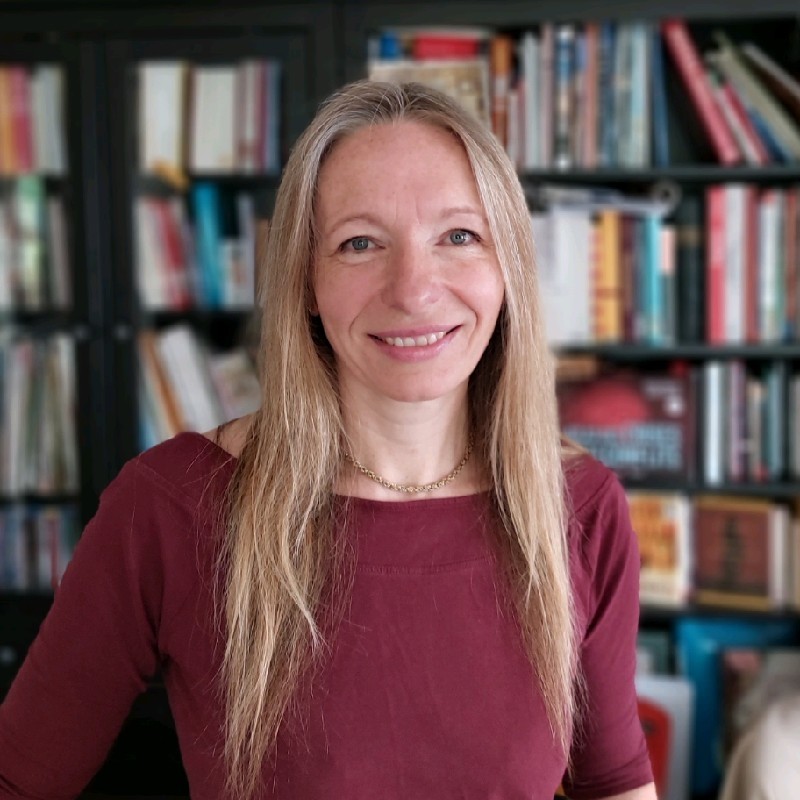
Carole is a project manager and sociologist with international experience across Europe and North America. With a background in linguistics, political science, and sociology, her work has focused on human rights, women’s initiatives, indigenous peoples, and sustainability. As a Certified Chocolate Taster, she is now deepening her expertise in ethical cacao sourcing and heritage cacao varieties.
Want more content like this? Subscribe to The Foodscapes Collective to be the first to know about articles like this and more.



Leave a Reply