Along a public road in Prado, Bahia, a family is transforming neglected land into a productive growing space, sharing its harvest rather than selling it. Their experiment raises questions about food access, community spaces and how we measure the value of agriculture.
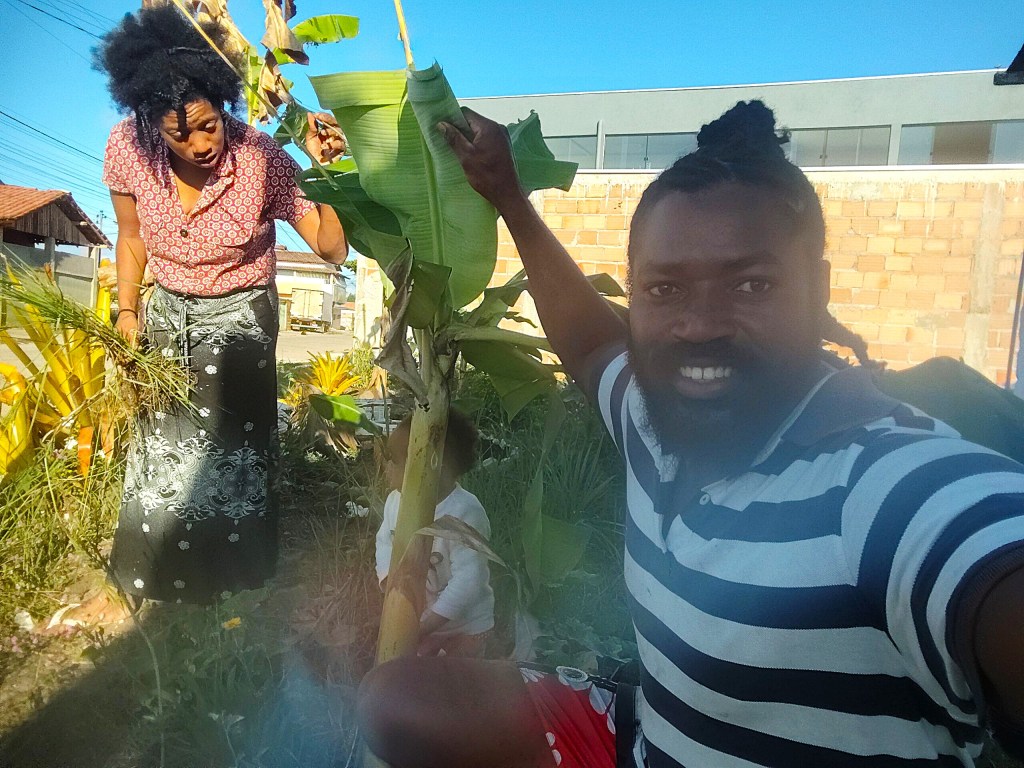
Why must every pumpkin become a sale before it becomes dinner? Along a public road in Prado, Brazil, a Jamaican–Korean–Brazilian family is putting that question into practice. The Trott Bailey Family has transformed a neglected roadside area into a productive growing space, sharing more than 316 kilograms of harvested produce.
Sherika Trott Bailey and her husband, Kimroy Bailey, call their approach an AgriGames Foodway, a concept developed as part of their broader Trott Bailey Family Civilization vision. The idea is to establish spaces where food is grown and made freely available to the surrounding community.
Their project in Prado, which they refer to as the Prado Foodway, is one practical expression of that concept. The harvest has included bananas, pumpkins, watermelons and papayas.
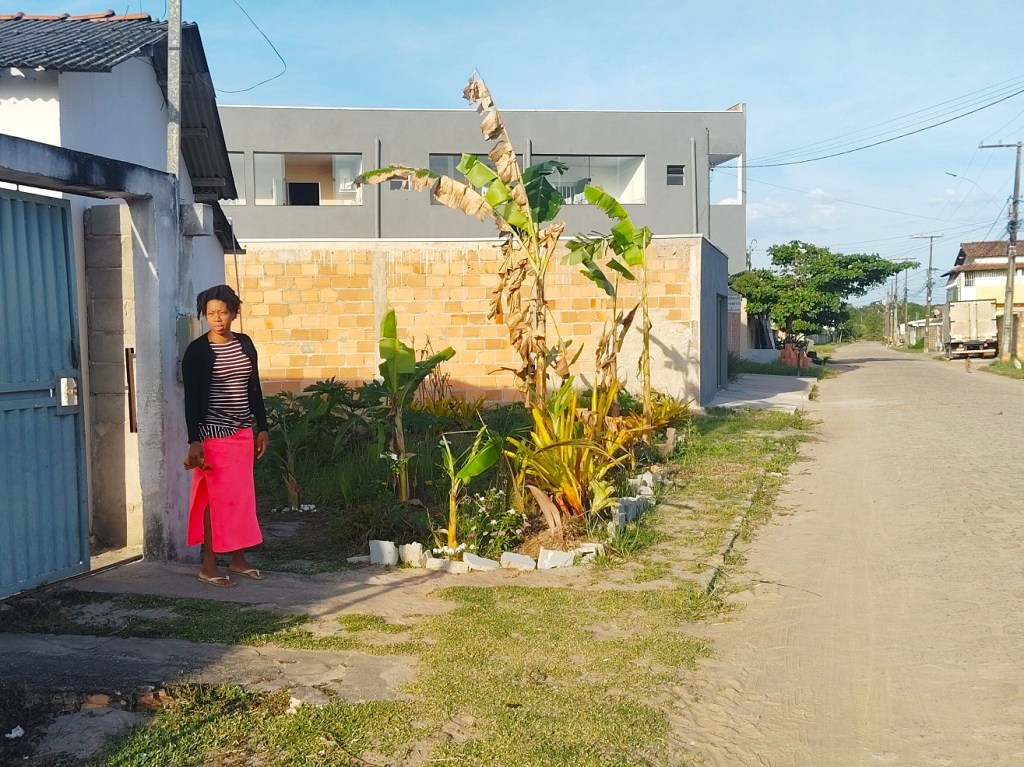
Before the family began planting, the roadside area was largely neglected and covered with discarded materials. Vultures, dogs, cats and horses regularly visited the site in search of food scraps and competing over what they found.
The project began with the clearing of rubbish, then bringing in soil and adding organic matter to prepare the growing beds. The original ground was too dry and sandy, presenting challenges for establishing productive crops.
The family has documented the site’s transformation, from the initial clearing and soil preparation to the spread of vegetation and the production of food. They continue to incorporate organic material into the growing beds and report improvements in the soil’s appearance and growing conditions. They have also observed more insects and other small creatures around the cultivated areas.
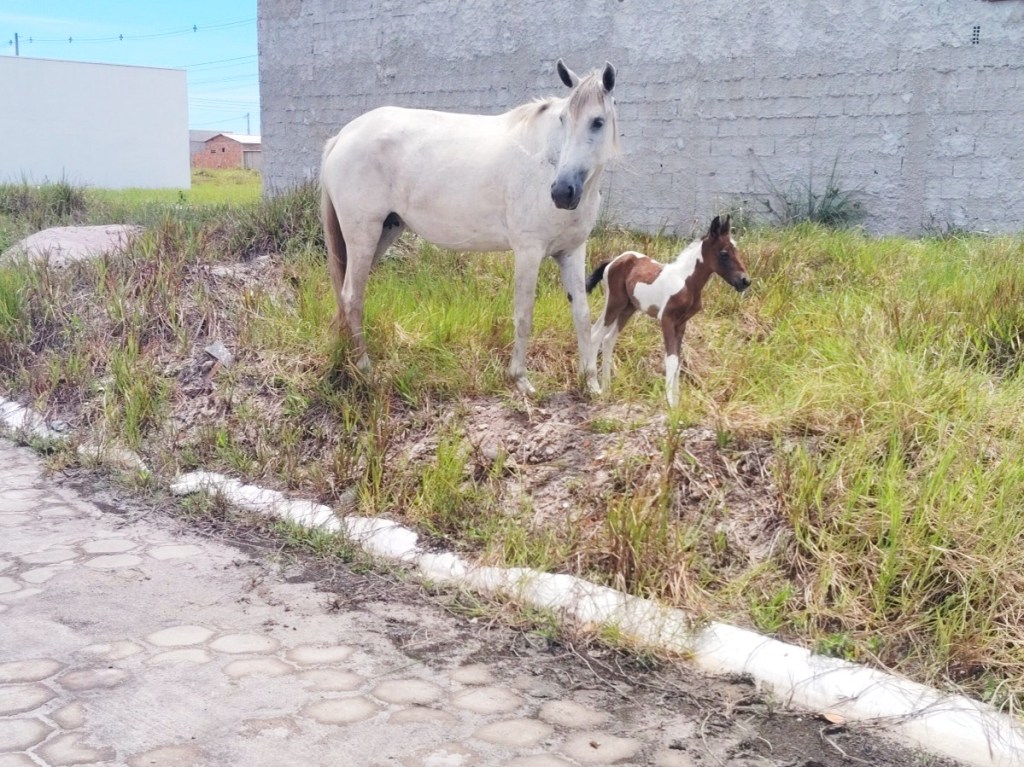
The land remains unfenced, and horses continue to wander through the area. Rather than treating them as a problem to be excluded, the family has incorporated them into its approach and will occasionally feed them banana leaves. An area that once attracted animals searching through rubbish now provides vegetation, food and shade.
It is a modest example of how neglected land can be put to productive use while making room for other forms of life.
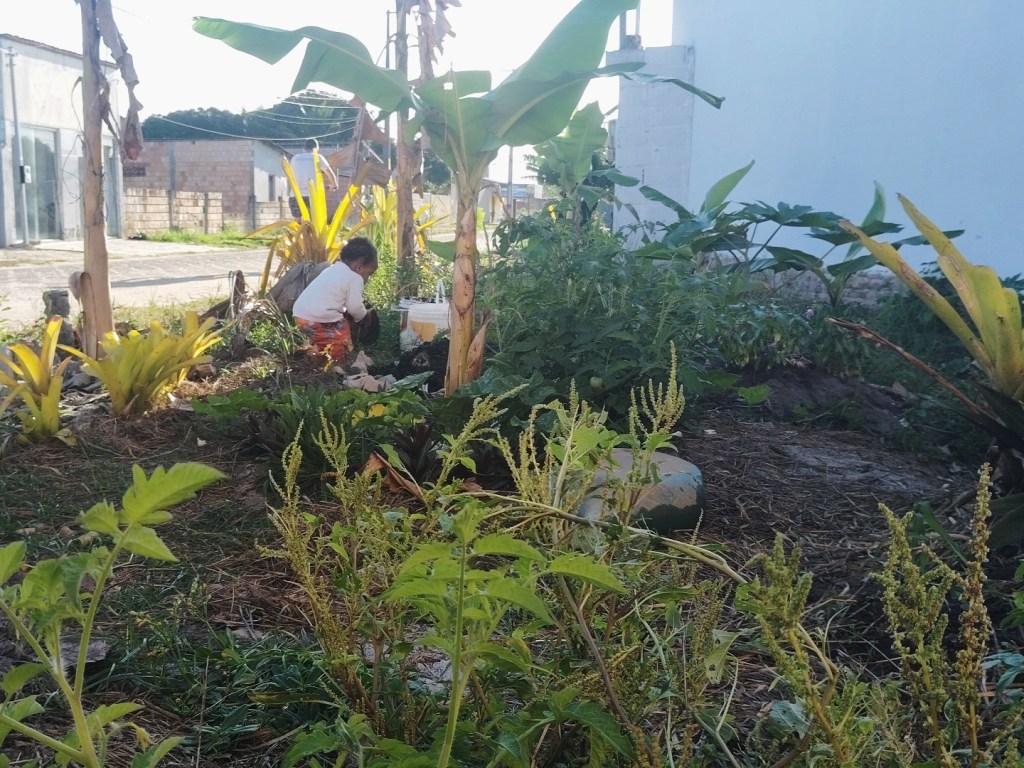
Growing food is only one purpose of the space. The family also envisions it as a place where children can learn, people can gather, and knowledge can be shared across generations.
The Trott Bailey children spend time around the growing beds, learning about plants and the natural environment through everyday activities. According to their parents, the older children help introduce younger visitors to the garden, share their knowledge and encourage curiosity about the insects and other life found among the crops.
The family also describes the Foodway as a place where elders can sit in the shade, talk and share knowledge. These activities are not separate from the project’s agricultural purpose. They are part of how the family understands the value of a productive landscape.
This is an important distinction. The value of a growing space is not necessarily limited to the quantity of food it produces. It can also provide opportunities for education, social interaction, recreation and connection with the natural environment.
For the Trott Baileys, these benefits contribute to a broader understanding of wealth: having access to food, useful land, healthy surroundings, time with family and opportunities to learn.
One of the more interesting aspects of the project is the family’s decision to give away its harvest rather than sell it.
When people questioned why they would distribute their produce for free, the family developed a financial comparison to explore what selling the harvest might actually involve.
Their published 32-week spreadsheet estimates potential gross sales of R$1,422, compared with R$9,336 in additional selling costs. This modeled scenario is a difference of R$7,914 in costs exceeding potential revenue.
The estimated expenses include packaging, transportation, storage, market attendance and labour. These are costs associated with getting produce from the growing beds to paying customers, rather than simply producing the food itself.
The figures represent a hypothetical market scenario based on the family’s assumptions, not a record of completed sales or an independently verified financial assessment. Nevertheless, the exercise raises an interesting question about the economics of small-scale food production: how much time and money are spent growing food, and how much is spent making it commercially viable?
The family argues that the additional work involved in selling the harvest would take time away from growing, maintaining the land and spending time together. As Sherika and Kimroy put it in their account, “Selling sucks. It is a headache!”
Their approach challenges the assumption that agricultural production must ultimately generate income to be worthwhile. If the intended outcome is food on someone’s table, giving away the harvest can be a deliberate choice rather than a failure to find a market.
Of course, this approach depends on the availability of land, resources and people willing to maintain the growing space. It is not necessarily a replacement for commercial agriculture, but it does demonstrate that selling produce is not the only way to create value from agricultural activity.
The Trott Bailey Family’s ambitions extend beyond its roadside project. It proposes establishing Foodways in neighbourhoods, schools, parks, hospitals and residential areas, treating access to freely available food as a form of public infrastructure.
This raises an interesting possibility for local governments and urban planners.
Public parks, roadsides and other municipal spaces already require resources for landscaping and maintenance. In many places, this includes planting ornamental trees and maintaining grass that serves primarily decorative purposes. What if some of these spaces were instead designed to produce food?
Fruit trees, edible plants and community growing areas could provide additional benefits from land that is already publicly maintained. Rather than simply beautifying a neighbourhood, public green spaces could also contribute to local food availability.
There are, of course, practical considerations. Food-producing public spaces require appropriate plant selection, water, ongoing maintenance and clear responsibility for harvesting. They also need to be accessible and managed in ways that account for food safety and the needs of the surrounding community.
Nevertheless, the underlying idea deserves consideration. Public land does not have to serve only one purpose. With thoughtful planning, green spaces could contribute to recreation, biodiversity, environmental improvement and food access simultaneously.
The family also connects its Foodway model to the costs of establishing and raising a household. For young couples and families, having access to freely available food could reduce some recurring household expenses. In its wider vision, food provision is connected to housing, healthcare, education, water and transportation as interconnected elements of a sustainable society.
The AgriGames Foodway is part of the Trott Bailey Family’s wider effort to develop an alternative model of society, which it calls the Trott Bailey Family Civilization. The family has also developed an Abundance Global Scorecard, a methodology intended to compare access to resources across 243 countries and territories.
Its underlying argument is that national agricultural production alone does not tell us whether people have enough to eat. A country might produce substantial quantities of food, but that does not necessarily mean its population can afford or access it.
This distinction is particularly relevant to discussions about food security. Increasing agricultural production is important, but so are affordability, distribution and access. Food availability at the national level does not automatically translate into food on the table for individual households.
The family’s approach places these questions within a broader philosophy of abundance, in which resources should be organized to meet people’s everyday needs. As Sherika puts it in the family’s written account, “Free food is the backbone of an abundant civilization.”
Whether or not one agrees with the family’s wider vision, its roadside project offers something tangible to consider. Food has been grown, harvested and shared. Neglected land has been cultivated, children have learned outdoors, and a public space has taken on a new purpose.
The Prado Foodway remains a small and evolving project. The family continues planting, observing what grows successfully and adapting the space over time. Its long-term ambitions are considerably larger, but the roadside experiment provides a starting point for considering how food systems might be organized differently.
It also invites us to reconsider how we measure the success of agricultural spaces. Yield, revenue and productivity are important measures, but they do not capture everything a growing space can contribute.
A pumpkin can be worth something beyond its market price. It can feed a neighbour, introduce a child to gardening, contribute to a household’s food supply or simply be enjoyed by someone passing by.
Perhaps the more interesting question is not whether every pumpkin should be sold, but why we so often assume that it must be.
Photos courtesy of the Trott Bailey family.
Joel Matheson
Joel Matheson is co-founder of The Foodscapes Collective and is passionate about sustainable agriculture, food security, and climate resilience. He holds an MA in Global Studies and a BA in Environmental Studies. He was a Peace Corps volunteer in Jamaica and Nepal.
Want more content like this? Subscribe to The Foodscapes Collective to be the first to know about articles like this and more.




Leave a Reply