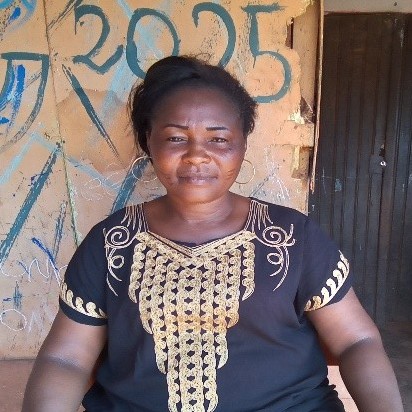
Name: Irene Kouadio Ahoutou
Location: Côte d’Ivoire, Lôh-Djiboua, Lakota, Gbahiri
Type of Farming: Cacao
Years Farming: 15 years
This article was translated from French. To read the original, click here.
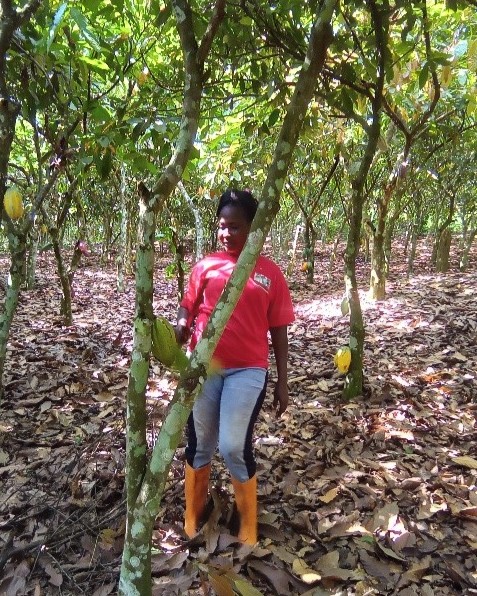
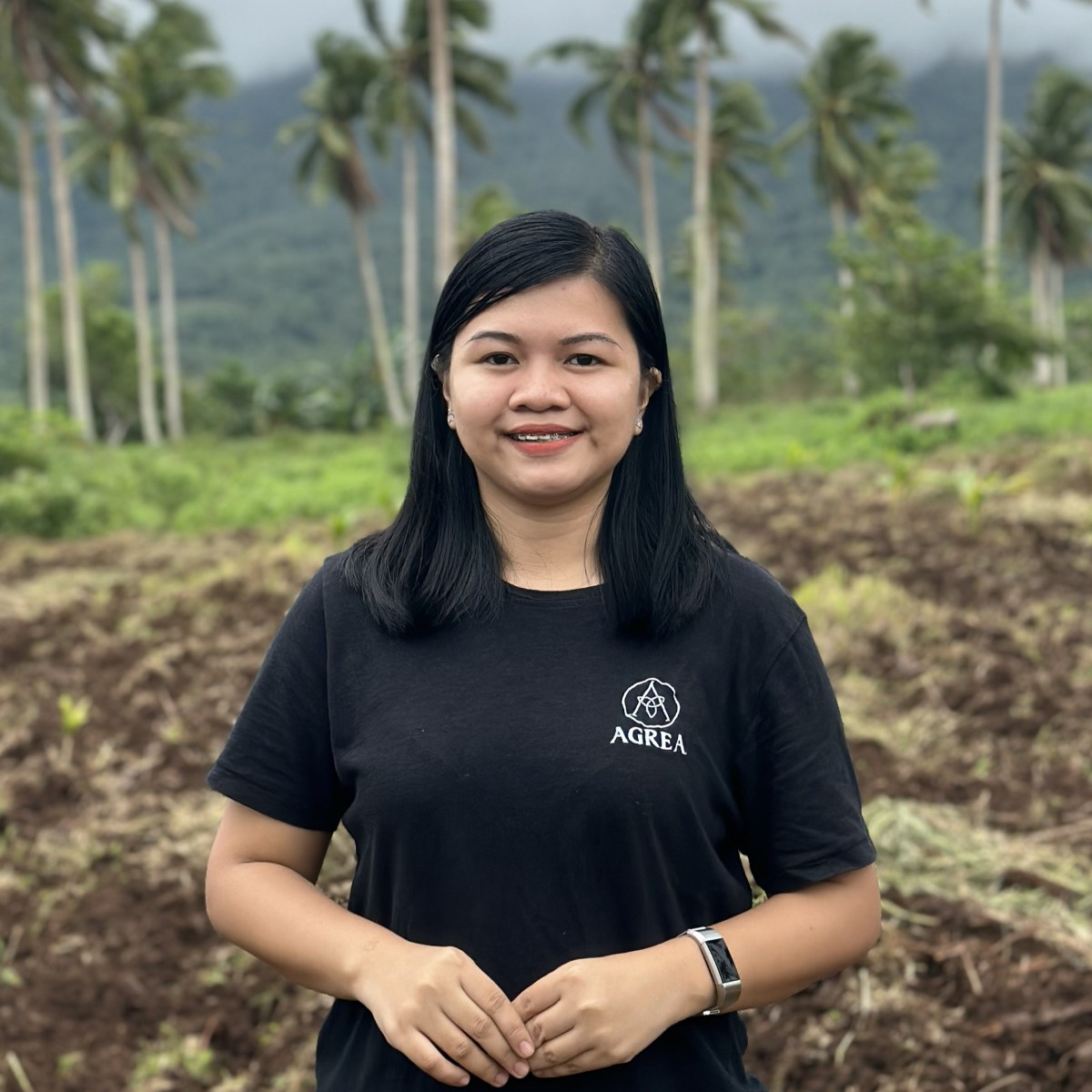
Irene Kouadio Ahoutou is a cacao farmer based in the Lakota region of the Ivory Coast. Working on a small-scale farm, she primarily cultivates cacao for chocolate and cosmetic products.
In addition to farming, she also serves as the President of the Association for the Promotion of Community Mutual Aid in her village. Through cacao farming, Irene has been able to support her family, community, and gain financial independence.
In recognition of the International Year of the Woman Farmer, The Foodscapes Collective is highlighting women farmers whose work sustains families, communities, and food systems. This series shares the voices and experiences of women farmers through short conversations about their journeys, and the meaning of growing food.
In this farmer profile, Irene reflects on how cacao farming has helped her grow as a community member.
What first inspired you to become a farmer?
I became a farmer because, as an illiterate woman, I did have many options for making my mark in the community. After some reflection, I realized that farming could not only provide me with food but also help me achieve social success within my community.
Who taught you how to farm? Where did you learn?
Being a cacao cultivator is not easy, but in my situation I learned from my parents at a very young age in Bouake (central Ivory Coast). I moved to Lakota (centeral-western Ivory Coast) to set up my own farm in a more forested region that is better suited for cacao growing.
What does a typical day on the farm look like?
If it’s a new field, I’ll set up nurseries for cacao seedlings that will be planted in raised beds. Once the trees start producing, my days are mostly spent weeding, pruning suckers and trimming trees. On some days we also remove loranthus (a parasitic plant that grows on the branches of woody trees).
What challenges do you face as a woman farmer?
The main problem here is that once you have secured land and paid the required deposit, someone may come and take the field away from you once it starts producing a crop, claiming that the land does not actually belong to the owner who previously sold it to you and that the real owner has suddenly come forward. And when that happens, it leads to endless disputes and perpetual conflicts.
What does growing food mean to you? Is there a crop/product that feels especially meaningful?
It brings me a sense of pleasure and fulfillment because, even though we don’t consume the beans directly, they are used to produce chocolate and cosmetic products. So for me it is a source of satisfaction, and it also provides me with a means to support me family as I was able to build my family a house with the profits. I also like to grow cassava on 1 to 2 hectares of my farm.
What advice would you give to a young woman who wanted to farm?
To young women, I would tell them that being a cacao farmer is not an easy job, just like any profession for that matter, but with perseverance it can provide a livelihood. It is better to do something promising, such as growing cacao, than to sit back and do nothing, as it offers financial independence. I encourage my sisters to be committed, for success comes after hard work.
Photos courtesy of Irene Kouadio Ahoutou
Carole Dupuy-Batkai
Carole is a project manager and sociologist with international experience across Europe and North America. With a background in linguistics, political science, and sociology, her work has focused on human rights, women’s initiatives, indigenous peoples, and sustainability. As a Certified Chocolate Taster, she is now deepening her expertise in ethical cacao sourcing and heritage cacao varieties.
Want more content like this? Subscribe to The Foodscapes Collective to be the first to know about articles like this and more.



Leave a Reply