Written by Leo Mallet
Explore the interactive culinary archives at www.leomallet.com
Gastronomy is an art involving matter, volume, and emotion. Yet, in our digital age, we have reduced these sensory masterpieces to flat, two-dimensional images. Although photography captures a visual result, it imposes a barrier: the viewer remains passive. To truly feel the intention behind a dish, the brain must make an effort of imagination.
From my point of view, the future of digital gastronomy is not just about showing a plate, but also about inviting the audience to step inside its universe to experience it with all their senses. As a Creative Technologist and 3D Artist, I have made it my mission to build this new digital frontier.
I call this « Spatial Storytelling ».
The most important rule of spatial storytelling is fidelity. The story already exists. The Chef is the author, and I am the digital sculptor who translates their vision. My role is to connect the physical masterpiece with the digital space, ensuring that no emotion or details are lost in the process.
I don’t want a result that is purely utilitarian, capturing the form but lacking the soul.
My process is fundamentally different. It’s a meticulous digital craft. I don’t just “scan” a dish; I interpret it. I sculpt the precise texture of a sauce, recreate the microtextures of a crust and design a custom studio lighting environment that reflects the Chef’s initial intention. Each culinary creation requires its own unique universe.
To ensure that these high-fidelity sculptures can be instantly experienced by anyone, I use an emerging neural rendering technology called Gaussian Splatting (3DGS). This technology is not the art itself, but rather the canvas. 3DGS allows these complex and hyper-realistic digital sculptures to work perfectly in real time on a standard screen, allowing the client to admire the chef’s creation from all angles by moving it with just their finger.
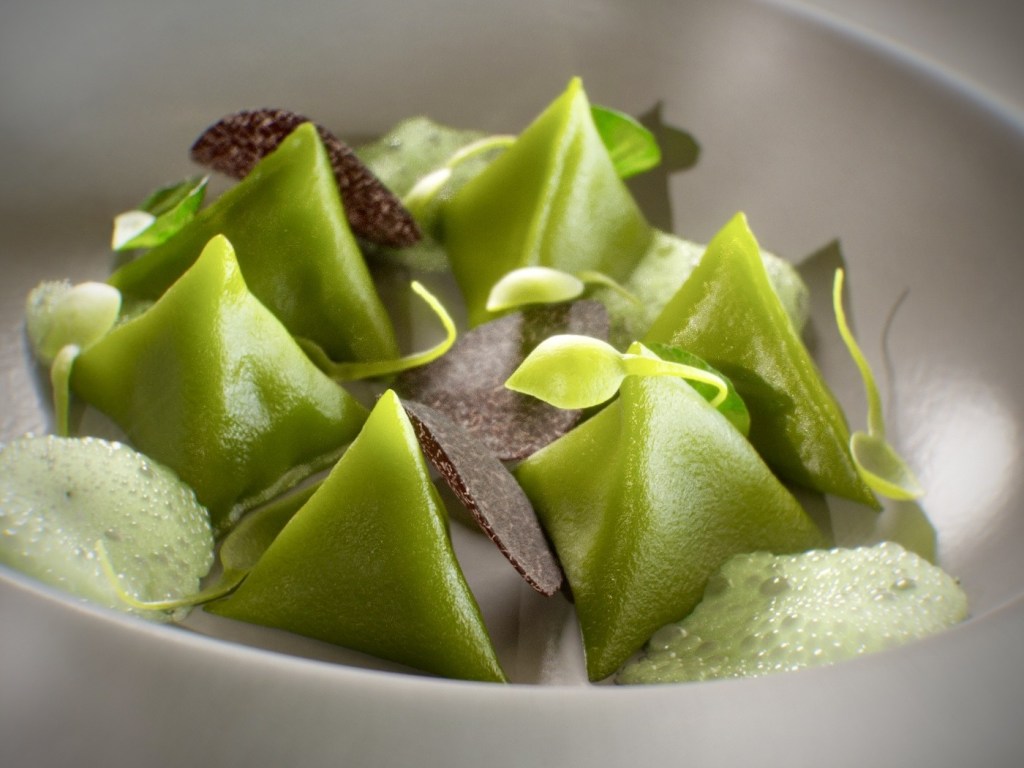
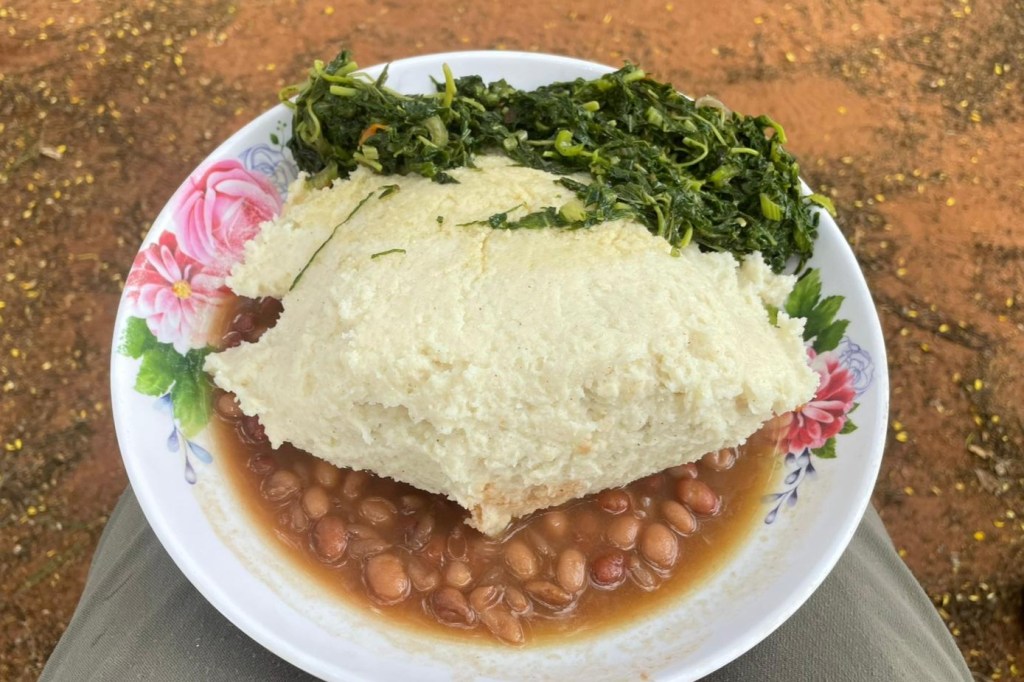
Through this artistic lens, I design interactive ecosystems in which the dish is the center of its own universe. I adapt this methodology to the unique narrative of each Chef I will work with. I have had the opportunity to translate into the spatial narratives of world-class creations, such as the architectural elegance of Anne-Sophie Pic’s iconic Berlingots, to the rich, organic matter of Kwame Onwuachi’s Chicken Shawarma, and the bespoke terroir of Leon Angel’s Sea Rice.
Treating a digital dish as a unique artwork changes the paradigm. We no longer build tools, we create immersive digital extensions of the dining room.
For starred chefs and luxury hotels, the brands that stand out tomorrow will not be those with the most visually saturated Instagram streams. They will be those who master the art of spatial storytelling, offering their audience an immediate, emotional and interactive taste of their excellence. They do not only sell their dishes but also an out-of-the-ordinary culinary experience.
Léo Mallet
Léo Mallet is a Creative Technologist and 3D Artist who works at the intersection of high-end CGI and neural rendering. Using his unique process, he translates the ideas of renowned chefs into immersive, spatial experiences, redefining the standards of digital craftsmanship in the luxury and gastronomy industries
Want more content like this? Subscribe to The Foodscapes Collective to be the first to know about articles like this and more.




 The Foodscapes Collective
Leave a comment