
Article written by Andrew Gerren (Resilient Farmer Drew)
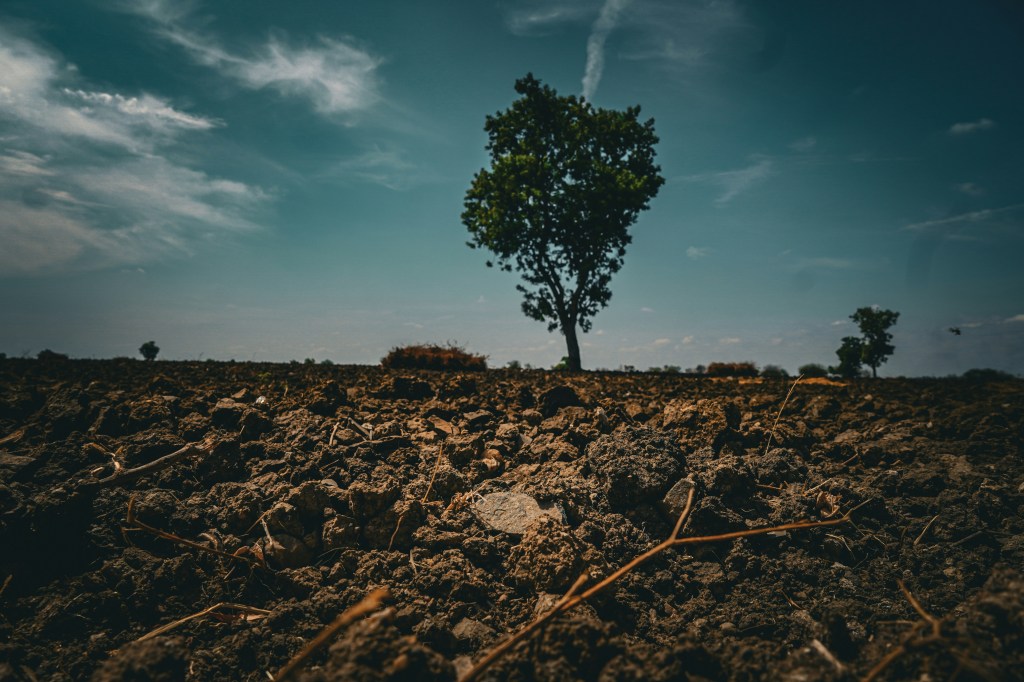
Photo by Fayis Musthafa on Unsplash
Soil, Loss, and the Cycles That Carry Us
Even before I could name human grief, the world around me had shown it to me.
Not through words. Through process. In an incessant doing of microbes, death is unraveled, transformed into life. Death is metabolized into new life. Last year’s losses pay dividends this year. I’ve farmed for decades in the steamy, often unforgiving climates of Florida, the Caribbean, and the Pacific. If I’ve learned one thing from these places, it is this: death is not the opposite of life. It is the engine of it.
That understanding did not arrive in a single moment. It accumulated, the way soil does – slowly, seasonally, one turned field at a time. But when loss finally came for me in ways I could not walk away from at the end of the day, it was the soil that gave me a framework sturdy enough to hold the weight.
The Biology Beneath the Surface
Successful agriculture starts with an idea that most people find unpleasant. Death equals life. Underneath our feet, billions upon billions of organisms break down what used to be roots, stems, and residues, storing that fertility for the future. Fungi make up root systems many times larger through an exchange of water and minerals for carbon. Bacteria fix nitrogen straight from the atmosphere.
Decomposers strip dead matter down to its elemental building blocks, returning them to a cycle that has no beginning and no end.
When we use chemical farming and wipe out microbes, we become reliant on things that are, in essence, already dead. There’s no reconciliation for ecological mourning like this. The message is clear. Restrict death and decomposition, and the whole system suffers. Suppress the natural cycle of death and renewal, and the entire web weakens.
It’s taken a while, but industrial agriculture is now starting to grasp what indigenous communities and ancestral farming practices have always understood. Healthy soil = healthy microbes. The fertility we chase with inputs already exists beneath us, built and rebuilt by organisms that have been doing this work for millennia. We just have to stop killing them long enough to notice.
The War You Cannot Win
In the tropics and subtropics, pest pressures and diseases are constant companions. They do not exist in a vacuum. They are symptoms of the soil, the surrounding environment, and the many choices we make every day as stewards of the land. Soil health, crop diversity, water management, timing, and the overall balance of the system all shape whether pest pressure builds or whether the farm begins to develop its own resilience.
For too long, the dominant agricultural model has operated with a mindset of conquest. Our culture has instilled in us a belief that we are meant to dominate. In a related vein, industrial agriculture has poisoned our soil, built on the illusion that we can dictate outcomes by brute force. But you cannot wage war on the system that feeds you. Balance is always the answer.
Diverse plant systems and living soils create their own checks and balances. Nature already knows how to do this; it is a process called succession, and it happens all the time, everywhere, without our permission. But it requires the one input that is hardest for humans to provide: time. When you work with land that has been degraded by decades of the dominion model, you have to learn a radical kind of patience. The ground does not heal on your schedule. Sometimes it takes years of quiet observation before the land finds its voice again.
The Seasons I Could Not Prepare For
The farm is a mirror. I know this because over the past few years, my own inner landscape has faced a series of harsh winters that no cover crop or soil amendment could address.
My mother, three years ago. My father, two years ago. My nana, this past May. And alongside them, several close friends and acquaintances on my path.
Loss has a way of reshaping how you see the world. There is a sorrow in it that does not fully leave. But when I step outside of it and look in the way you look at a field from the road before walking into it, I can see that these moments carry some of life’s deepest lessons. Grief, at its core, is the sensation of a connection being severed. But the soil has shown me that severed connections do not simply vanish. They decompose into something else, something that feeds what remains and what comes next.
I think about cover crops. A cover crop is often deliberately terminated at the end of its season, its biomass surrendered to the soil so that the next planting can feed from it. There is something almost ceremonial about it. I think about the people I have lost, and I see cover crops. Their presence enriched the soil of my life. Their absence, as raw and devastating as it felt, left behind a transformed earth – something I could eventually grow from again. Farming gave me permission to see loss not as a theft, but as a transformation. Painful, but purposeful.
Inoculating the Depleted Ground
There is a practice in regenerative agriculture called inoculation, which introduces beneficial microbes into soil that has been stripped of life. After a great loss, we tend to feel a void more than ever and, in a sense, yearn for something similar. For myself, grief had left my inner landscape as bare as a field after decades of industrial abuse.
I would not call it healing. That word implies an arrival, and I am not sure I have arrived anywhere. But tending the land gave me somewhere to put the grief when I did not know what else to do with it. The worlds of ethnobotany and herbalism offered something I could not find elsewhere: not a cure, but a continuity and connection. A reason to keep paying attention.
Plants do not explain your loss to you. They just keep growing, and somehow that quiet insistence becomes its own kind of instruction. Continuing to make educational videos, though the motivation comes in waves and quiets at times, became part of that process for me – another way of staying in relationship with the cycles I was trying to trust.
The parallel is not metaphorical to me. It is biological. The same intelligence that repairs a broken soil ecosystem operates within us, if we give it the right conditions.
Built Layer by Layer
The most resilient soils on Earth are those with the deepest history, layered with centuries of organic matter and rich in microbial diversity, built over countless cycles of life and death. Human resilience works the same way.
Loss after loss, year after year of grieving, I’ve metaphorically accrued layer upon layer. Not armor, but something more alive. Something more akin to soil: dark, rich, and fertile, with potential for life that I never could have planned before experiencing a loss.
In soil science, we talk about the carbon, nitrogen, and water cycles – all closed-loop natural processes of acquisition, utilization, loss, and regeneration. There is no beginning or end in nature, only cycles. Our culture (Western society, especially) fetishizes life as a straight line with birth on one end and death, which is really just a cessation, on the other. Farming busts that myth wide open every season. The wheat we eat to feed our family this year was nourished by what remained of last year’s crop when it gave itself back to the soil. Death is not outside of the cycle. Death is the cycle.
Once I started to understand and accept that, everything shifted for me. I stopped seeing each loss as something that ripped my life apart. Instead, I started to notice them as cycles, as things that come and go. And please don’t misunderstand me when I say the truth about loss and coping. There are no guarantees, it will still find you when you least expect it, sneak up and punch you in the stillness when you’re vulnerable. But what I’ve realized is that even through the pain, even when that emptiness is still there, it helps me remember what really mattered.
Others may speak of feeling close to those we’ve lost in ways I cannot understand or speak from personally. My reality differs. Instead, I’m given glimpses: a song on the radio. An old memory pops into my head without any trigger. Sometimes, I see a comment on my phone from years ago. Or I’ll accidentally click on a video I wasn’t prepared to re-watch. It lingers. It never resolves, and that is where I find truth. There is no conclusion; life is about cycles. I see them every day working with the earth. Witnessing the process of those microbes as they turn death into life confirms its reality for me.
The chasm between intellectual understanding and genuine feeling can be vast. Perhaps, that notion is the most human aspect of this whole thing: we can stand in a field watching as nature recycles everything so elegantly and still have no earthly clue what to do with our own mortality. In actuality, we’re all just temporary residents here, occupying a brief space in the span of time, trying to grasp what the soil understood even before life had a pulse. It’s all a cycle. Composting, rebuilding, shifting beneath a surface that looks still.
What the Dirt Teaches Us
Without a seed’s predecessors dying and returning to the earth in humility, nothing new could grow.
That truth reaches far beyond the fence line of any farm. Our return to nature to its rhythms, its patience, its insistence on cycling everything back through is also a path toward reconciliation. With ourselves. With one another. With a world that too often feels defined by chaos, grief, division, and disconnection.
While the world feels heavy, the land quietly offers another way of seeing. The same cycles that sustain ecosystems – growth, decay, renewal are the cycles that shape our lives. We are made of the same elements as the soil. The carbon in our bones is the same carbon that once fed a root, was exhaled by a microbe, and fell from a leaf.
If we can learn to work with cycles rather than against them, in farming or the chaotic, wonderful mess called life, we can cultivate systems, communities, and relationships built on knowledge, respect, and understanding. Something infinitely more resilient than we could ever force into existence.
Most people hear the word “dirt” and think of something ordinary. Something to wash off. Something beneath them.
But beneath us is where everything begins.
I’ve worked in soil for years. Dug in it. Planted in it. Made my living from it. But it wasn’t until I looked closer, really looked, that I saw what I’d been walking over all along. Under a microscope, that dirt became a universe: billions of microbes. Fungal networks threading through the dark. Entire ecosystems working together in ways I couldn’t see.
That’s when it clicked.
Loss works the same way. It feels empty. Final. But beneath that surface, in the places we can’t see, something is happening. The breaking down feeds what comes next. Death starts the cycle again. Nothing gets wasted.
The invisible world taught me the most honest lesson of my life: what matters most is what we can’t see – and to cherish what we can while it’s here.
So now when I look down, I don’t see dirt. I see where everything grows, including what comes after loss
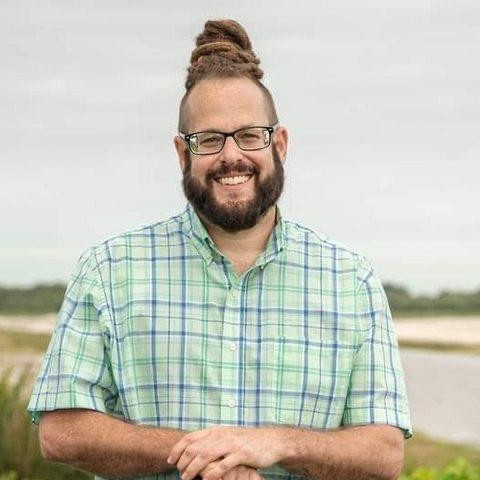
Andrew Gerren
Andrew Gerren is a farmer, ethnobotanist, and sustainable agriculture consultant with 17+ years of tropical farming experience and over a decade in plant medicine. Trained at the University of Hawai‘i at Mānoa, he specializes in soil health and regenerative systems tailored to local microclimates. A former Peace Corps Volunteer in Jamaica, he has supported nationwide extension efforts through the Jamaica Organic Agriculture Network. He previously managed Newfield Farm in Florida and now runs Sacred Herbs & Botanicals and Incredible Foodscapes, advancing resilient, community-based food systems.
Want more content like this? Subscribe to The Foodscapes Collective to be the first to know about articles like this and more.



 The Foodscapes Collective
Leave a comment