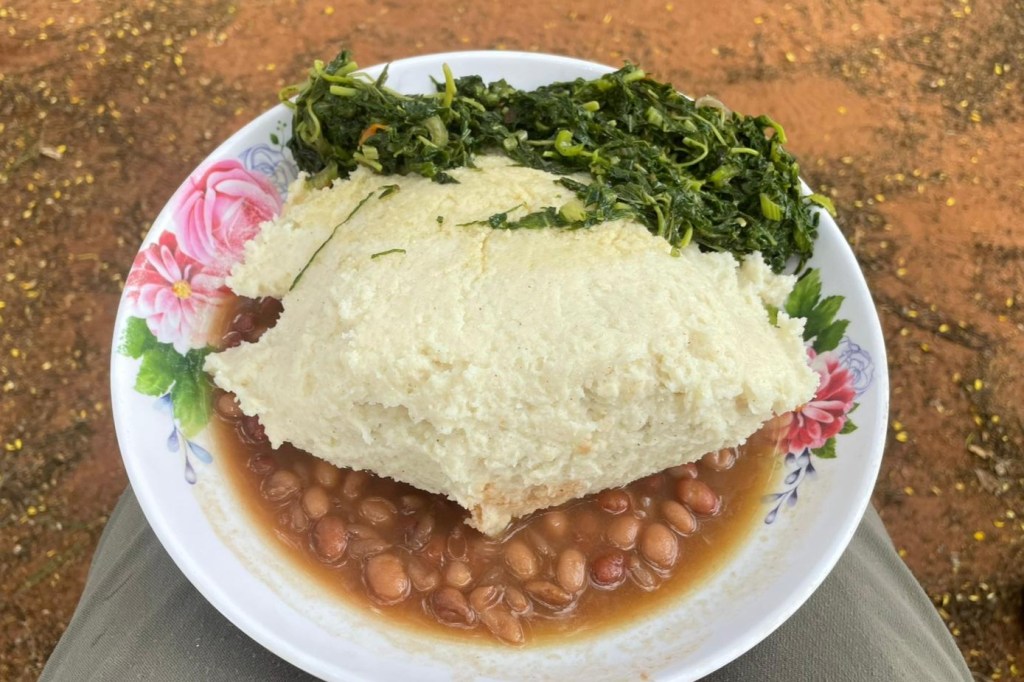
In this edition of our bite-sized histories series, we take a closer look at Ugali na Maharage, a simple yet powerful dish at the heart of Tanzanian cuisine.
What is Ugali?
Ugali is a dense, dough-like starch made from maize flour and water. It’s soft yet firm, rolled by hand, and used to scoop up flavorful sides. No utensils needed. Though its flavor is neutral, ugali is beloved for its ability to balance out boldly seasoned accompaniments like beans, meat, or leafy greens.
Across East and Southern Africa, versions of ugali go by different names: nsima in Malawi, sadza in Zimbabwe, and posho in Uganda. But in Tanzania, ugali reigns supreme as the daily go-to dish. It is affordable, filling, and easy to prepare.
Maharage, which is “beans” in English, are ugali’s most popular partner, especially in regions where meat is less frequently consumed. The beans are slow-cooked, boiling with salt and later being roasted with onions, tomatoes, and sometimes coconut milk or groundnuts (peanuts). These beans are rich in flavor and nutrition. Together, ugali and maharage offer a balanced, plant-based meal enjoyed across the country.
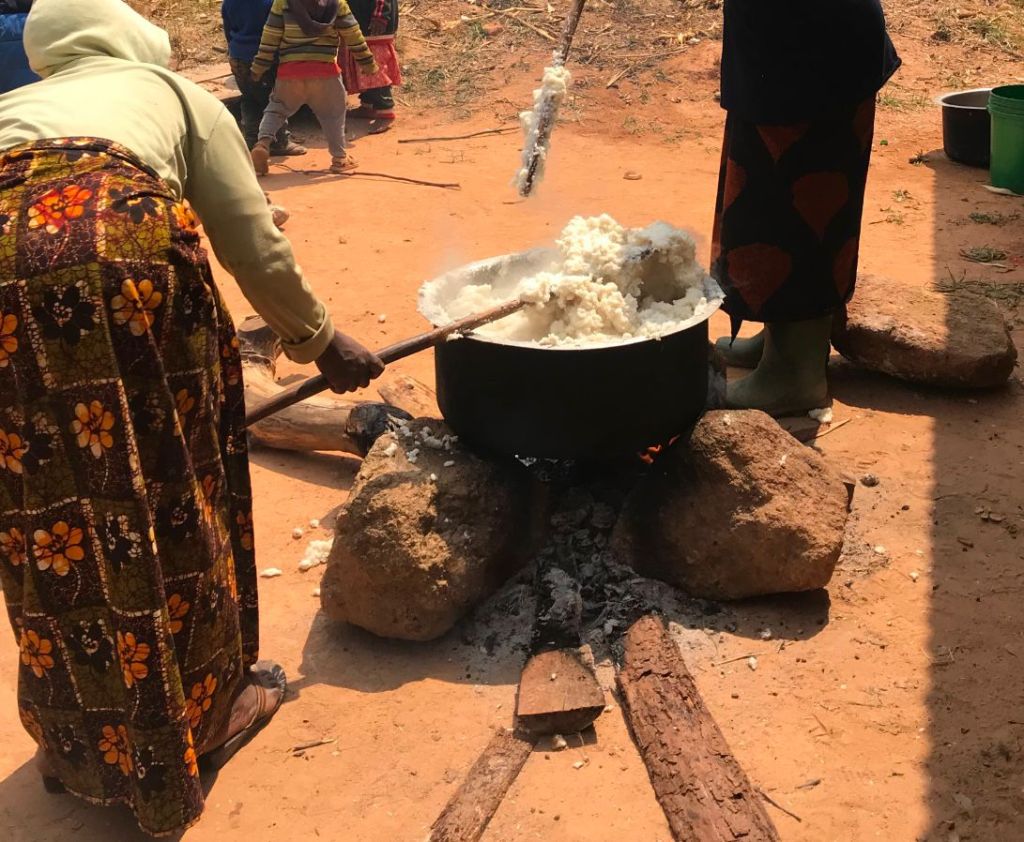
Ugali is more than a meal, it’s also a symbol of resilience, simplicity, and shared life. It’s eaten daily by people of all classes and cultures, from busy city dwellers to farmers in the countryside. Traditionally served on a communal plate, family members gather around, pinch off pieces by hand, and scoop up stews or vegetables. A moment of connection and community.
That said, ugali’s role shifts slightly during holidays and festive events like weddings. In these celebrations, the spotlight moves to dishes like rice, pilau (spiced rice), meat stews, and green banana. Ugali is often present, but more as an extra placed quietly at the end of the buffet for those who want it or didn’t fill up on the richer fare. It remains respected, but takes a back seat to more festive foods during such occasions.
Cultural Significance and National Identity
Ugali is deeply tied to Tanzanian identity. It transcends ethnic and social boundaries, appearing in almost every home and school, on tables in both rural villages and government offices. Whether paired with fried sardines, spinach, or maharage, ugali is a unifying food and simple but essential.
Eating ugali is also a cultural practice. It’s commonly eaten with the right hand, and every bite reflects generations of tradition. It’s taught to children early, shared with guests as a gesture of hospitality, and trusted to satisfy hunger even during hard times.
Using maize as the key ingredient of ugali was introduced to East Africa by the Portuguese in the 16th century, likely through coastal trade. Over time, it replaced traditional grains like millet and sorghum, becoming the dominant crop due to its resilience and high yields. By the colonial era, ugali was already a staple.
Beans, on the other hand, have long been cultivated in the Great Lakes region. Packed with protein, fiber, and minerals, beans became a daily source of nourishment, particularly for households without regular access to meat. Their versatility made them an ideal match for ugali.
Regional Flavors and Modern Twists
While ugali and beans are universal, regional variations give the dish local character. Along the coast like Zanzibar, Tanga, and Bagamoyo, beans are simmered in coconut milk and spiced with turmeric or cardamom, showcasing the influence of centuries-old Swahili-Arab trade. In the Southern Highlands, peanut paste may be added for depth and richness.
More recently, urban kitchens have started experimenting with alternatives like cassava flour (ugali wa muhogo), whole maize flour, and even sorghum, as people seek healthier, high-fiber options or gluten-free alternatives.
Whether served with a tomato-rich bean stew in the highlands or a coconut-infused version on the coast, ugali na maharage carries the flavors of history, identity, and daily life.
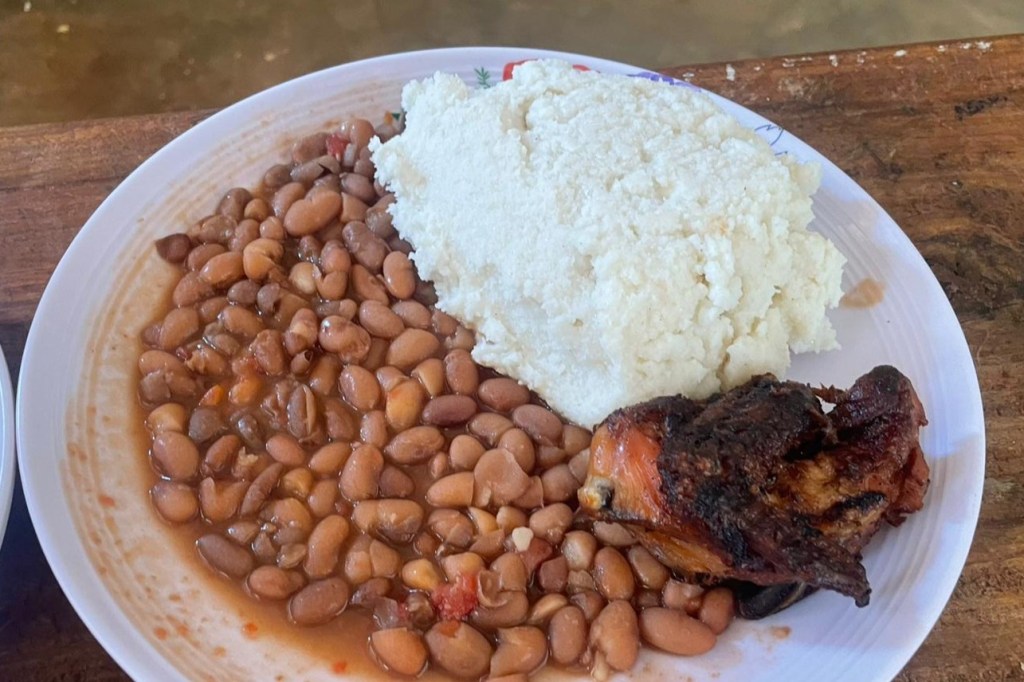
Ugali na Maharage Recipe
(Inspired by Tanzanian home kitchens and coastal flavors)
Ingredients (Serves 3–4)
For Ugali:
- 1kilogram of maize flour
- 4 cups water
For Maharage (Bean Stew):
- ½ or 1/4 kilogram of dried beans
- 1 large onion, chopped
- 2 cloves garlic, minced (Optional)
- 2 tomatoes, chopped (Optional)
- 1 tbsp oil
- ½ tsp turmeric (optional)
- 1 cup coconut milk (optional – coastal style)
- Salt to taste
Cooking instructions
Ugali:
- Bring water to a boil in a heavy pot.
- Add a small handful of maize flour and stir to make a thin porridge.
- Let it boil, then gradually add the remaining flour while stirring continuously.
- Stir and press the mixture for 5–10 minutes until it becomes firm and smooth.
- Shape into a mound and cover briefly before serving.
Beans:
- If using dried beans, you can soak overnight and boil until soft or boil without soak.
- In a pot, sauté onions and garlic in oil until golden.
- Add tomatoes and cook until softened.
- Stir in cooked beans, turmeric, salt, and coconut milk or a little water. Simmer 15–20 minutes.
Serve hot, with the bean stew on the side and enjoy by hand, the Tanzanian way.
Ugali photos by Adam Roh

Hamisi Matemelela
Hamisi Matemelela is a certified Swahili language and cross-cultural consultant with 11+ years of experience helping people navigate East African language and culture. He has worked with diplomatic missions and international NGOs like the U.S. Peace Corps and Alliance Française. Hamisi blends language instruction with cultural storytelling, using writing, workshops, and training to deepen cross-cultural understanding and celebrate Tanzanian heritage.
Want more content like this? Subscribe to The Foodscapes Collective to be the first to know about articles like this and more.




 The Foodscapes Collective
Leave a reply to Ny Cancel reply