
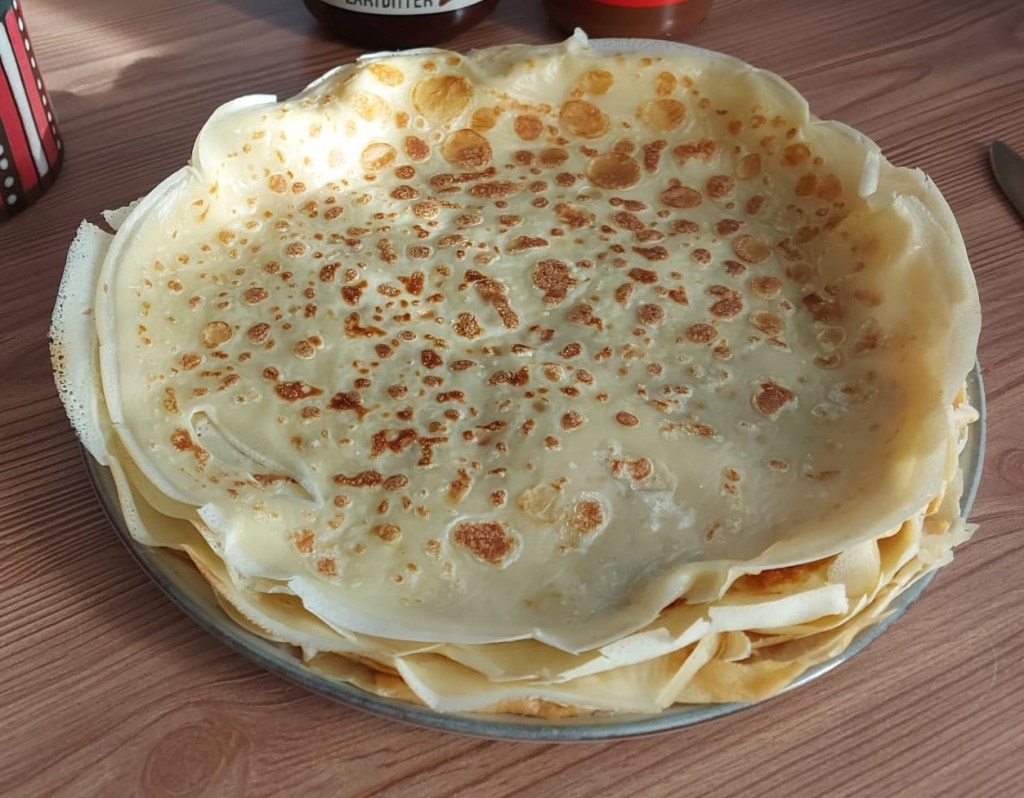
Every year on February 2nd, France celebrates “La Chandeleur”, a day that blends tradition, religion and food. Known in English as Candlemas, La Chandeleur has become synonymous with one beloved stable: crêpes. If you’ve read my previous blog post, you’ll know that crêpes hold a very special place in my heart (and stomach). They’re a food that instantly reminds me of home. So naturally, on La Chandeleur, our house is filled with sizzling pans and towering stacks of crêpes.
La Chandeleur has a long history, its roots stretching back to both pagan and Christian traditions. In pagan cultures, the month of February marked the return of light (the sun) and the promise of fertility in the Earth. These themes were present in the Roman festival of Lupercales, a celebration of purification held on February 15th. Similarly, Celtic traditions celebrated the purification of land in preparation for sowing.
When Christianity became the offical religion of the Roman Empire between the 4th and 5th centuries, many of these pagan festivals were gradually Christianized and La Chandeleur took on a new meaning. Seeking to replace the pagan celebration of Lupercales, Pope Gelasius I chose instead to commemorate the presentation of Jesus at the Temple in Jersualem by Mary and Joseph forty days after his birth, in accordance with Jewish tradition. This event, which falls on February 2nd is why La Chandeleur is still celebrated on that date today. During this presentation, Jesus was recognized by Simeon as the “light of the nations” and a moment that inspired Pope Gelasius I to establish a new tradition of candlelit processions, symbolizing light, renewal, and faith.
Of course, no La Chandeleur story is complete without crêpes, after all, no French holiday would be complete without something delicious. To celebrate Lupercales, people would light candles at midnight and eat thin pancakes made from remaining grains. Their round shape and golden color symbolized the sun and return of warmer weather, while the use of surplus flour represented prosperity and abundance. And according to legend, when Pope Gelasius I officially established La Chandeleur as a Christian holiday, he would distribute crêpes to pilgrims arriving in Rome.
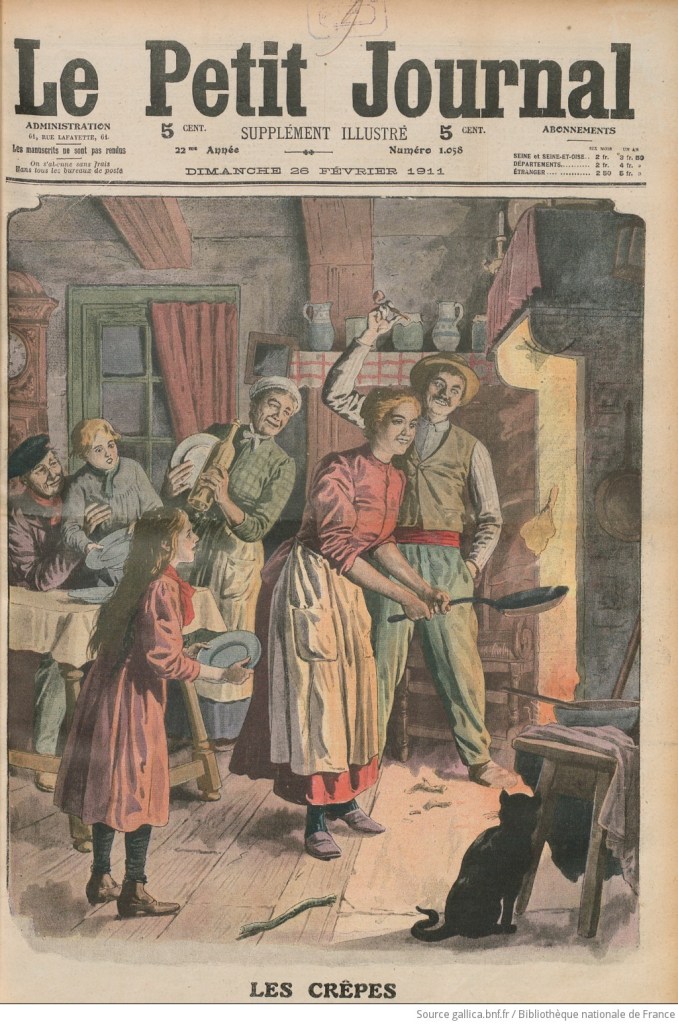
Over time, superstition and ritual became part of the fun. Apparently, flipping the first crêpe with your right hand while holding a gold coin in your left hand is said to ensure financial prosperity in the coming year. Whether or not that comes true, it’s hard to argue with any tradition that encourages good food, shared moments, and one more crêpe than planned.

Want more content like this? Subscribe to The Foodscapes Collective to be the first to know about articles like this and more.




 The Foodscapes Collective
Leave a comment