
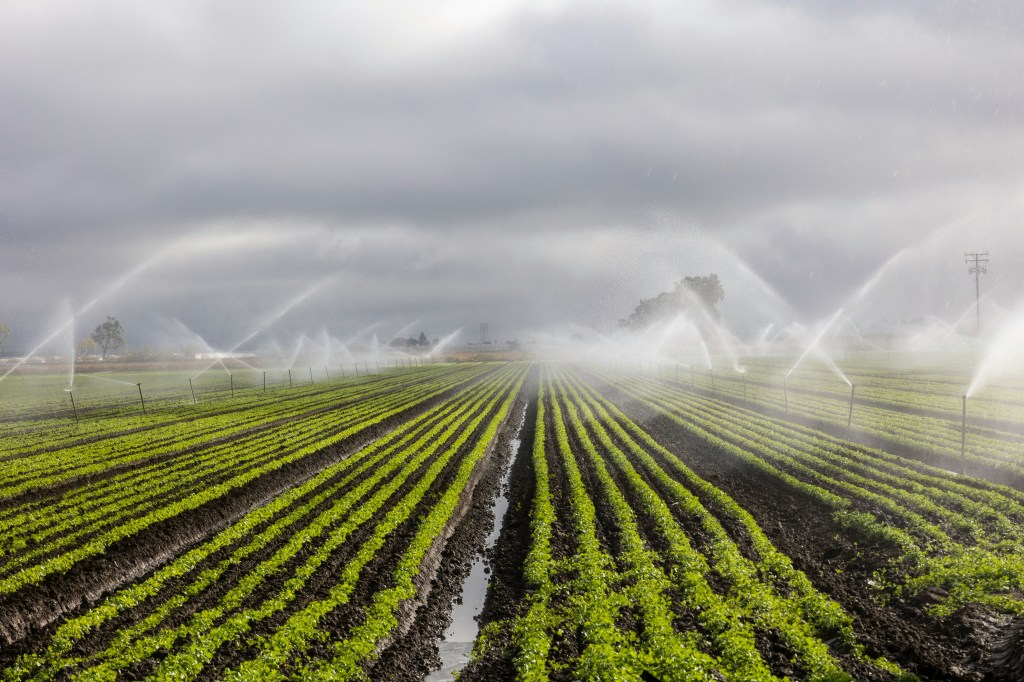
Water is life — yet less than one percent of the world’s water is safe and available for human use. As demand rises and resources shrink, how we use water today will shape the future of food, health, and entire economies.
Water is a finite resource that underpins every aspect of life. We depend on it at three main levels: municipal (for drinking water and sanitation), industrial, and agricultural. Beyond human use, water sustains ecosystems, plants, and animals. But the numbers are stark: according to the FAO, only about 1% of all water on Earth is both fresh and accessible for human use.
The UN recognizes access to water as a human right, and yet the reality falls short. An estimated 2.2 billion people lack safely managed drinking water, more than 2 billion live in countries facing water stress, and 3.6 billion struggle with inadequate water access. Paradoxically, agriculture accounts for 90% of global freshwater consumption, raising questions about how to balance human needs with food production.
To better understand and manage water use, the concept of the water footprint was introduced in 2002 by Professor Arjen Hoekstra at UNESCO-IHE. The water footprint serves as a “metric to measure the amount of water consumed and polluted to produce goods and services along their full supply chain”, according to the Water Footprint Network.
Building on this concept, researchers have developed models that bring the water footprint to life by simulating how crops actually use water under different conditions.
Dr. Oleksandr Mialyk, postdoctoral researcher at the University of Twente, shares how he uses a computer model to estimate water footprints of crops. “The model works a bit like gardening. Imagine you have a plant in soil — you water it from time to time so it can grow. This model is a simplified version of that process. It represents the soil as several layers through which water flows vertically, explaining why it is often referred to as a ‘bucket model’,” he says in an interview with the Foodscapes Collective.
The model simulates crop growth and estimates how much water is used daily for evapotranspiration. This is done by selecting a crop type and inputting various conditions such as temperature, water supply (via rainfall and irrigation), carbon dioxide and crop planting and harvest dates.
This model can provide valuable information for the agricultural sector as it reveals which crops consume the most water, across which seasons irrigation demand is highest, and how overall crop production impacts water use. Looking at historical data makes it possible to track trends over time, specifically whether water use is becoming more efficient, or whether scarcity is worsening and interventions are needed.
This kind of information is key to guiding decision-making about the future of agriculture for policymakers and agricultural industries.
Dr. Mialyk hopes that “the information could support farmers in planning cropping seasons and policymakers in providing incentives for more sustainable water use.”
This hope is shared by the Water Footprint Network, which uses “the water footprint concept to promote the transition toward sustainable, fair and efficient use of fresh water resources worldwide.” Recently, the network started exploring a new practice of water compensation – a scheme for companies to offset their water consumption via financing sustainable water-saving projects.
This work is urgent. In the previous three decades, global water consumption for crop production increased by nearly 30%, mainly after the early 2000s. And in the past 100 years, overall freshwater consumption has increased six-fold. This surge coincides with global population and economic growth, intensified globalization, and the development of open trade policies.
Crops such as oil palm, soybeans, maize, and sugarcane are among the biggest drivers of increasing water use — and much of this production isn’t even for direct human consumption, but for animal feed and biofuels.
These crops are considered flex crops because they can be used for multiple purposes: food, fuel, and industry. Their versatility makes them attractive to governments and investors, but it also concentrates their production in several highly productive regions, like Brazil, Indonesia, and the USA, causing all sorts of local and global environmental problems.
Dr. Mialyk explains, we have a system where “it is safer to invest into well-commodified flex crops like maize or soy than in one-purpose crops like beans and potatoes.” This results in a food system that is highly dependent on just a few water-intensive crops.
Moving toward more water-sustainable food systems requires action on both production and consumption. On the production side, water scarcity in overexploited regions must be addressed, while water-abundant areas should adopt incentives for efficient use. Tools such as water pricing — still rare in most places — could align individual decisions with broader social and environmental needs.
On the consumption side, dietary choices also matter. Reducing reliance on water-intensive foods, diversifying diets, and rethinking the need for crop-based biofuels are all part of the solution. For businesses, addressing water use is also about risk management: ensuring supply chains remain resilient under increasing environmental pressure.
Ultimately, the water footprint is not just an academic concept. It is a tool to guide smarter decisions — from farmers to policymakers, and from businesses to individual consumers. The way we measure and manage water today will determine whether this most vital resource can sustain our lives and ecosystems tomorrow.
Photo courtesy of Unsplash

Want more content like this? Subscribe to The Foodscapes Collective to be the first to know about articles like this and more.




 The Foodscapes Collective
Leave a comment