
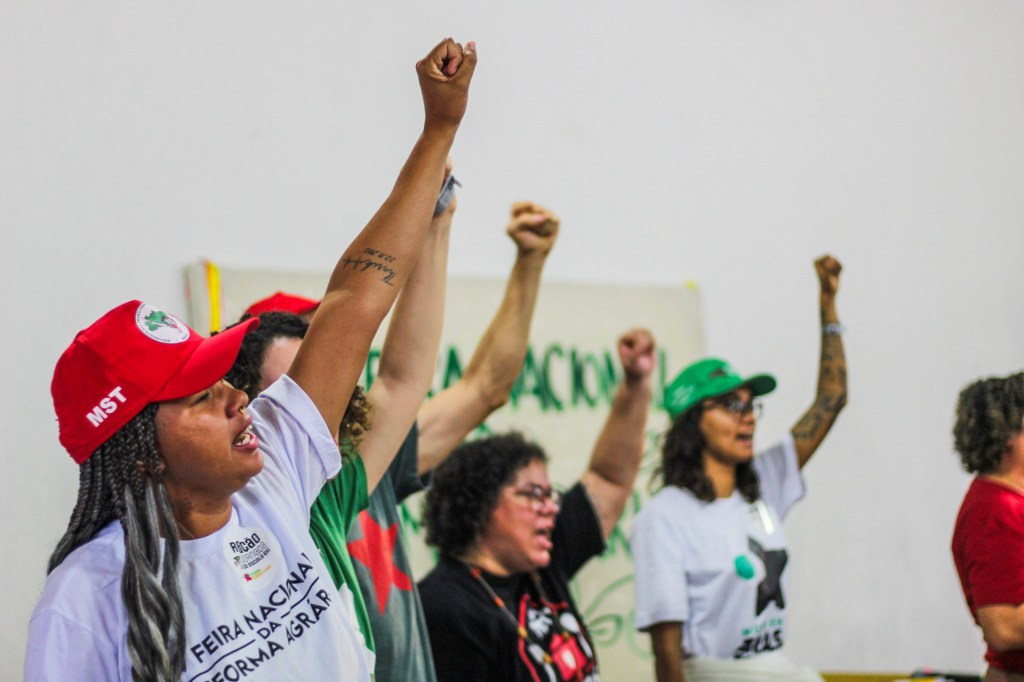
Between May 8th and 11th, the Landless Rural Workers’ Movement (Movimento dos Trabalhadores Rurais Sem Terra – MST, in Portuguese) organized the 5th edition of the National Agrarian Reform Fair in São Paolo, Brazil. This year, the Fair continued the work carried out in previous years and brought together 580 tons of food of 1,920 different types, produced by 180 cooperatives all over the country.
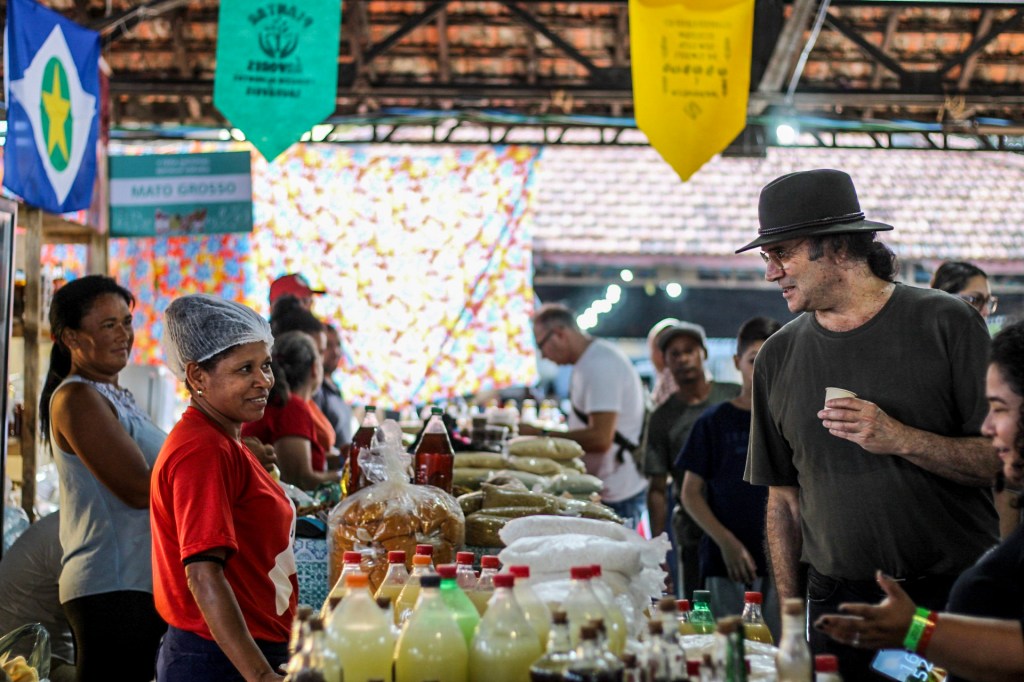
The Fair offered the MST’s products, a great diversity of fresh, processed and organic food, to 300,000 people who passed through over the last four days including the president in exercise Geraldo Alckmin, Paulo Teixeira (Ministry of Agrarian Development and Family Farm) and Deputies Lucia Marina, Ivan Valente and Guilherme Boulos. More than a market fair, the event is one of the largest expressions of the product of agrarian reform settled and encamped families from all Brazilian regions.
Brazil’s absent agrarian reform
Although Brazil has settled over 1 million families on just over 80 million hectares of land distributed across 9,500 settlements resulting from agrarian reform, land regularization, and colonization policies, it has amounted to nothing more than a series of isolated measures. Unable to tackle structural issues such as land concentration, Brazil’s land ownership system remains marked by individuals who own thousands of hectares while others struggle to access land. These problems are linked to violence, repression, and the assassination of political organization leaders, land grabbing in the Amazon, the destruction of the Savanna for soybean exports, and the use of pesticides.
The absence of a structural agrarian reform policy and agroecological territorial development undermines the production of healthy, affordable, and accessible food. Agroecology is seen as an essential production model for the future of agrarian reform, aiming to scale up production and become more accessible to different consumer profiles in Brazil. The production of agroecological rice in Brazil is one of the highlights of the Agrarian Reform driven by popular struggle. Successful experiences raise questions like, ‘How many more cases like this would we have with a structural agrarian reform and public policies committed to agroecological food production?’”
Celebrating Agrarian reform
In this way, the Fair is a celebration of culture, education, regional gastronomies, organization and landless struggle. Throughout the Fair, participants were able to take part in a wide variety of activities including educational seminars and workshops, agricultural exhibitions, as well as cultural events such as book fairs, concerts and movie showing. All this accompanied by the possibility to eat dishes and watch cultural performances from all over the country. Thus, the Fair is a materialization of popular projects and the results that can be achieved when the agrarian reform policy is actually implemented in Brazil.
According to data released by MST, the Fair gathered 200 cooperatives, 120 agroindustry, and 1.900 associations that represent more than 400.000 settled families that directly or indirectly contributed to make the event real. Based on agroecology and cooperation, the MST consolidates a new logic of production, supply and social justice throughout Brazil that prioritizes people, solidarity and food sovereignty against profit and surplus, a stark contrast to the colonial and landowning Brazilian agribusiness.
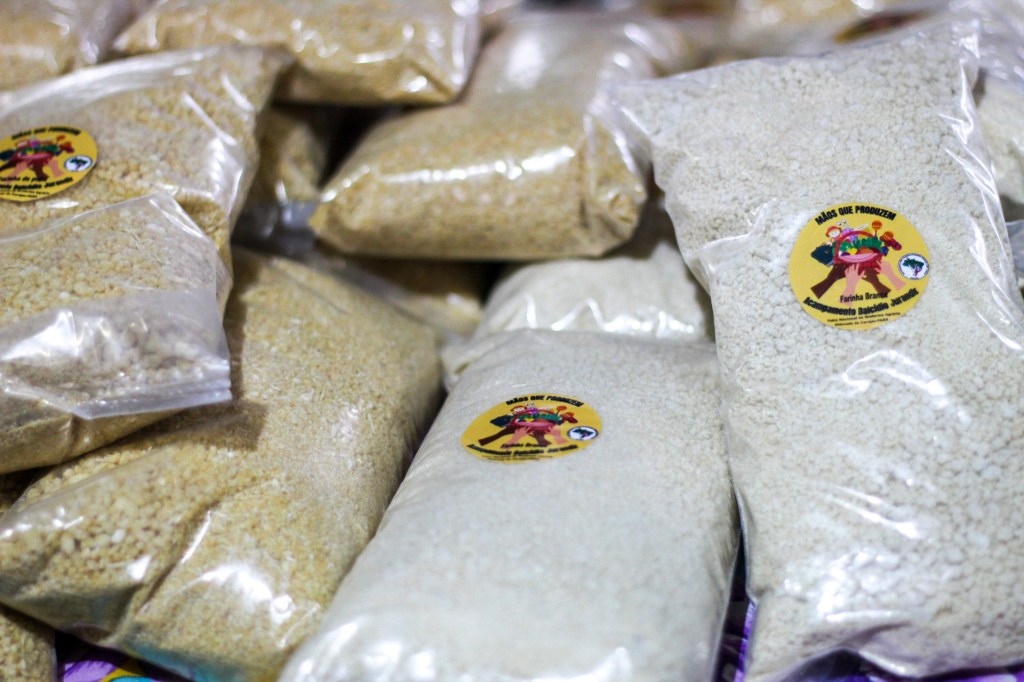
Through the National Union of Agrarian Reform Cooperatives and Association of Brazil (União Nacional das Cooperativas e Associações de Reforma Agrária do Brasil – UNICRAB), nowadays MST oversees an average of 30 national production chains, among them natural products – rice, cassava, beans etc – and processed products – juices, chocolate, honey, and milk, sold across fairs, markets and Brazilian kitchens.
In addition to being a form of employment and subsistence for peasant families at a time of crisis and food shortages, the MST production is a way to guarantee the supply of healthy food to the population. More than the production and commercialization, the MST has also pointed out the solidarity policy as another way for people to access food and overcome hunger and food insecurity.
Production, solidarity and struggle
Solidarity is a principle that runs through the history of MST, originating from the encampments by the side of the road and companionship. This principle is part of the revolutionary fire that maintains the life of the movement and – when hunger comes back to Brazilian reality – materializes in what the movement has called “solidarity politics”. The MST proposes to do what neoliberalism does not propose to do: it takes care of people.
In 2023, the MST received a United Nations award for donating more than 1.6 million lunchboxes to homeless people and needy families during the pandemic. In addition to this initiative, the MST also held the “Christmas Without Hunger and Solidarity Campaign”, and donated 25 tons of food during the last edition of the National Agrarian Reform Fair in 2023. This year was not so different, the Movement donated 25 tons of food to 50 communities in the metropolitan region of São Paulo.
By “bringing food to the tables” of homeless and disadvantaged families, whether through food donations or the popular kitchens developed by the MST together with other partner organizations, the MST immediately alleviates the problem of hunger, and simultaneously feeds the population with political education. For the MST, solidarity is part of a process aimed at transforming reality and overcoming the contradictions of the capitalist system.
Thus, for the Movement, just giving food is not enough. To overcome hunger and socio-economic inequality, it is necessary to combine popular participation with transformation and the construction of public policies promoted by the Brazilian federal government. One example of joint initiatives like this was the commitment of the National Supply Company (Companhia Nacional de Abastecimento – CONAB) to buy all the surplus fresh produce from the fair and send it to the Food Acquisition Program (Programa de Aquisição de Alimentos – PAA), a government policy that aims to buy food produced by family farmers and give it to people who need food support.
Environmental preservation, peasantry technology and agroecology
An important part of the 5th Fair was the launch of the “People’s Council for Tree Planting and Healthy Food Production”. An articulation between MST, universities, religious organizations and non-governmental organizations, the initiative aims to carry out environmental preservation actions and to act against the climate crisis.
The Council will work in partnership with the “National Plan Planting Trees, Producing Healthy Food”, which aims to plant more than 25 million trees in all biomes, recovering more than 15,000 hectares of forest. They aim to create spaces for dialogue with societies on relevant subjects such as the impacts of the climate crisis, land struggles and Popular Agrarian Reform, emphasizing the importance of active listening and the inclusion of local populations in their territories.
Moreover, by promoting agroecological and agroflorestal practices in peasant territories, the Council also aims to carry out reforestation and environmental recovery actions through productive strategies and training in settlements and cooperatives.
Another important Fair initiative was the Seminar “Digital Family and Peasant Agriculture in Brazil-China Cooperation”, the result of a partnership between the MST, University of Brasília (UNB) and the Chinese government to implement a Brazil-China Center. This is part of an effort to build cooperation between the two countries in order to develop and adapt Chinese technologies in Brazil that make it possible to advance family and peasant agricultural production.
From the Brazil-China Centre, it also aims to advance the production of sustainable bio-inputs and build a data processing system, linked to the Sinomach digital system – a Chinese state-owned company – for digital family agroecology. Consequently, what is being built is the gateway to building a certain degree of Brazilian technological independence, allowing the country to develop and manage its data sovereignly.
Democratization of Culture
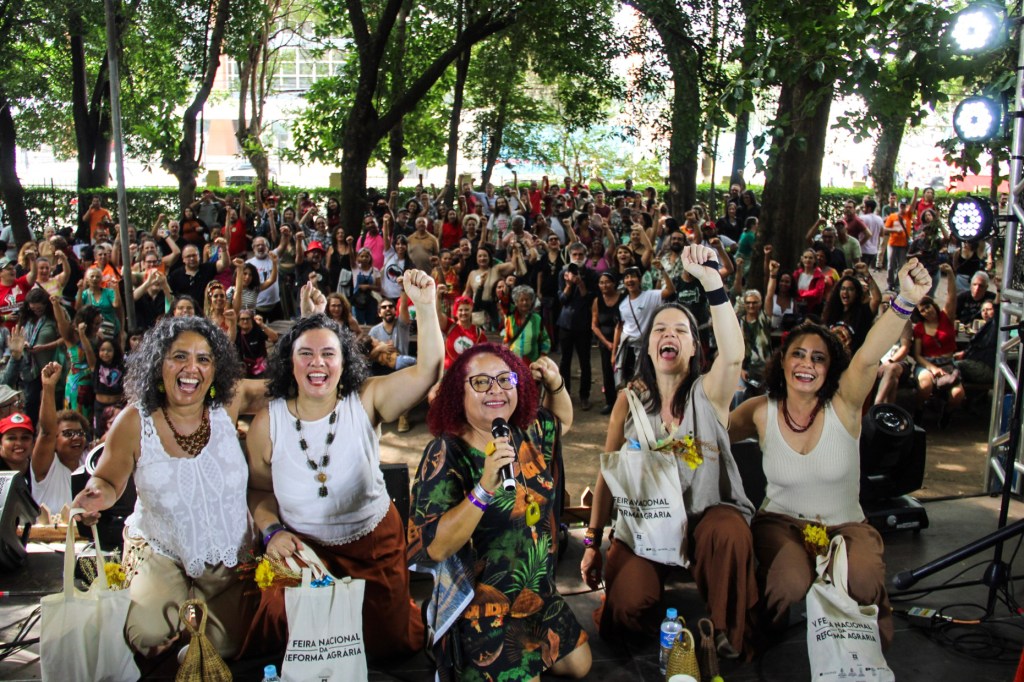
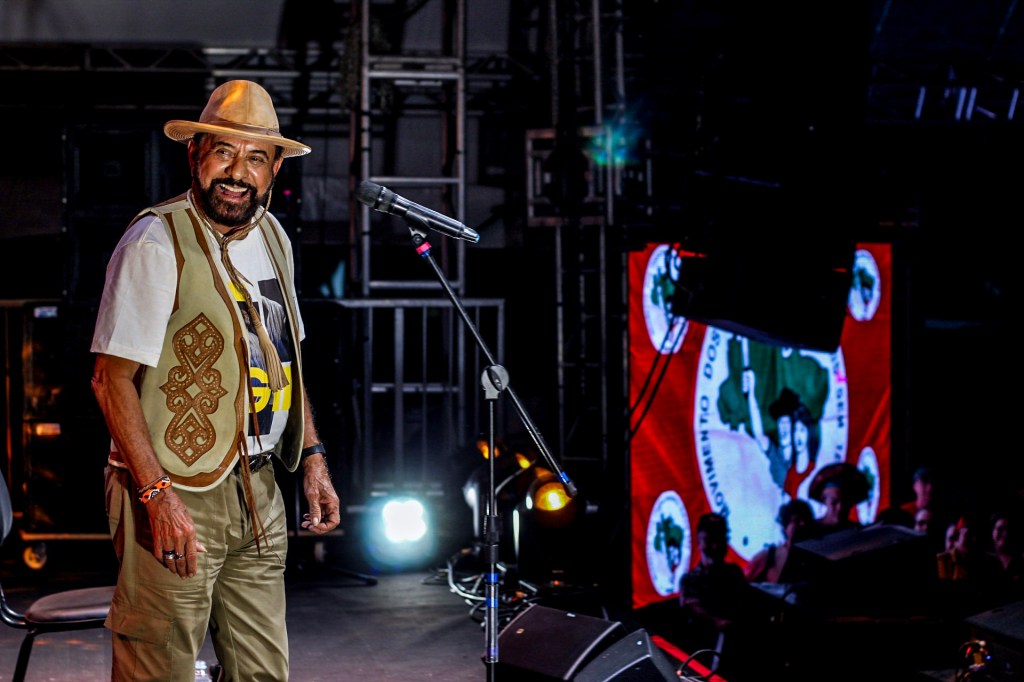
For the MST, cultural production is more than just a form of expression, it is also a form of counter-hegemonic struggle in a society taken over by a predatory capitalist cultural industry, which sidelines traditional knowledge. Its organizational model includes the ‘culture sector’, which is responsible for organizing debates around timely agendas with activists and society. At the 5th Fair, all of this manifested through 35 attractions of music, theatre, the Cinema Show, visual interventions, literature and many other artistic languages.
According to the movement, around 300 artists visited and performed at the Fair, celebrating Brazilian popular culture and peasant culture. Among them, there are presentations of artists who are campers and settlers of the MST, as well as bringing together nationally famous artists who support the movement, such as Arnaldo Antunes, Catto, Fat Family, FBC, Marina Lima and Paulinho Moska. The vast cultural program reaffirmed that, for the MST, access to culture must also be prioritized as a universal human right.
Photos courtesy of Emilly Firmino.
Emilly Firmino is an activist in the Popular Brazil Movement, a journalist, a PhD student in Geography at the University of Brasilia (UnB) and a member of the Brazilian Research Network on Struggles for Spaces and Territories (REDE DATALUTA) and the Group for the Study of Collective Actions, Conflict and Territories (GEACT).
José Sobreiro Filho is a professor in the Department of Geography at the Institute of Human Sciences (ICH) at the University of Brasilia (UnB), Brazil; deputy coordinator of the Brazilian Research Network on Struggles for Spaces and Territories (Rede DATALUTA) and coordinator of the Group for the Study of Collective Actions, Conflicts and Territories (GEACT).
Want more content like this? Subscribe to The Foodscapes Collective to be the first to know about articles like this and more.




 The Foodscapes Collective
Leave a comment