
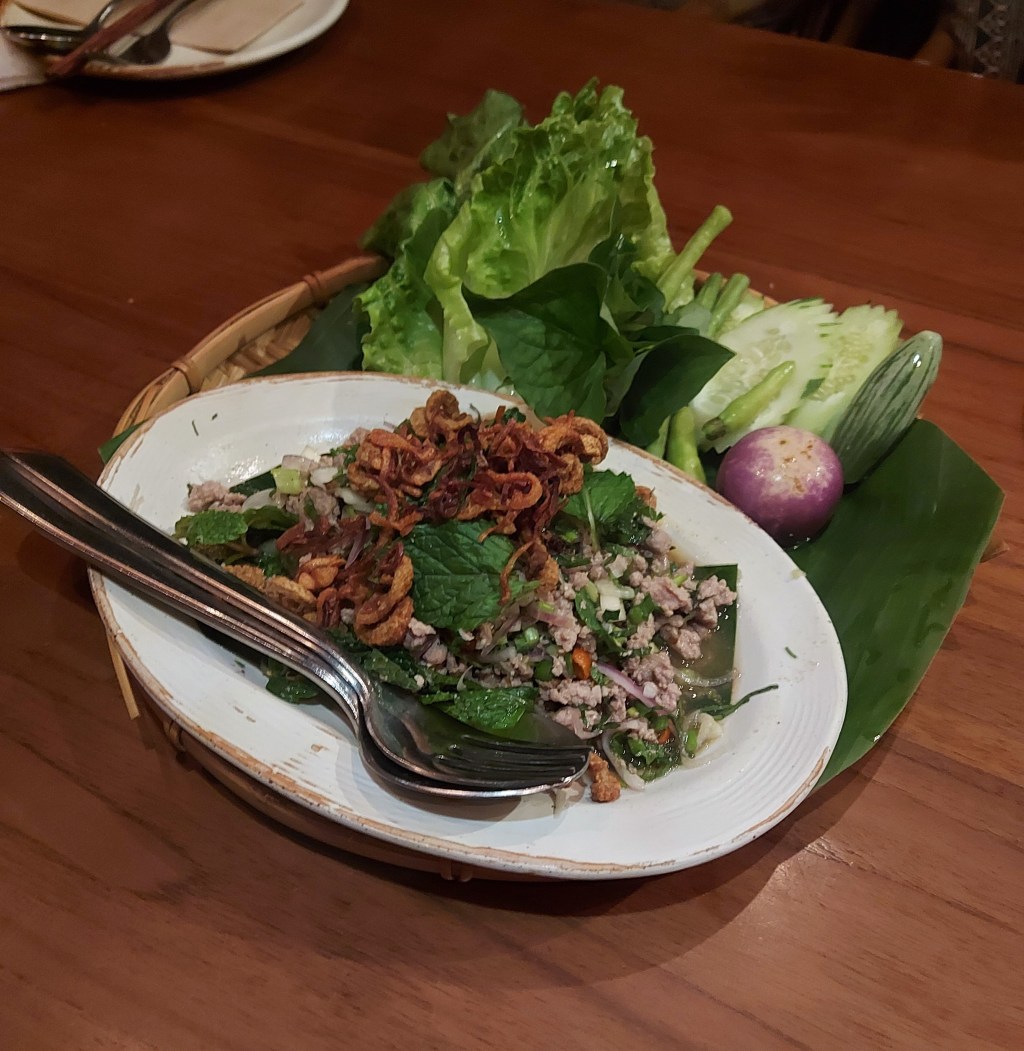
Food, culture and identity are deeply intertwined. More than just sustenance, food provides a window into different cultures, offering insights into their histories, traditions, and social structures. By tracing the origins of national dishes and ingredients, we can unravel the rich journey of food and culture across time.
In the first of our bite-sized histories series, we’re exploring laab – a versatile national dish of Laos.
Lao food is not widely known outside of its homeland and its flavors and cuisine remain distinct from its more widely recognized neighbors – Thailand and Vietnam. Lao cuisine heavily features freshwater fish, pork and water buffalo, as well as ingredients that are foraged from the vast forests occupying the land such as aubergine, lemongrass and bamboo shoots.
Laab is considered the national dish of Laos. It is a spicy salad composed of minced meat or fish mixed with a variety of local condiments and seasoning. It is served alongside raw vegetables and sticky rice. Depending on its preparation, it may also be referred to as nam tok or koy.
What makes laab, and Lao food unique is not only the ingredients, but also the way it is eaten. Lao food is known for its strong flavors, often highlighting bitter elements from ingredients like aubergines, bitter greens, and buffalo bile, which is used in some traditional laab recipes. Mint and padaek – strongly flavored fermented fish sauce – add distinctive tastes to enhance dishes like laab. While these components are common in Lao cuisine, they are not typically found in neighboring countries.
The eating style in Laos is also distinct. Sticky rice is a staple food and is eaten with fingers, so most Lao dishes were designed specifically to complement this practice. Many meals are communal and shared. To prevent food from falling into shared dishes, Lao dishes tend to lack a liquid consistency. This contrasts sharply with Thai cuisine, which features many soup-like dishes with coconut milk, for which steamed rice is more suitable.
The origins of Laab remain uncertain, as recipes were traditionally passed down orally. However, by the 1880s, European colonizers had taken note of its significance, describing it as the favorite dish of the Lao people in their record. A collection of handwritten recipes from Phia Sing, a royal chef to the kings of Laos (1898 – 1967), feature laap. The recipes describe it as a dish primarily served to Laotian royalty, indicating its association with the aristocracy. Historical accounts also mention laab as a dish prepared for kings and monks.
Laab is widely enjoyed across Laos today, especially during special occasions like weddings, festivals, and New Year celebrations. Traditionally, it was considered a dish of good luck and happiness, with families preparing it to mark joyous events, believing it would bring success in the coming year. Its association with festivities also stemmed from practicality—meat was once scarce for the average family, making laab a special dish reserved for important gatherings.
As a fundamental part of Lao cuisine, laab is also found in other parts of Southeast Asia, either through Lao migration or in former Lao territories that are now part of Thailand. The Northern Thai variation of laab differs significantly from the traditional Lao recipe, incorporating spices like cumin, cloves, and star anise—an influence that can be traced back to Thailand’s Lanna Kingdom’s position along historic spice routes to China.
Variations of laab can be found anywhere, with each family and restaurant specializing in their own versions and preferences. Today, some places are also offering vegetarian and vegan alternatives.
Laab exemplifies the unique flavors and rich traditions of Lao cuisine, a culinary heritage that remains distinct and deeply rooted in its history and landscape. By exploring such a dish, not only can we appreciate its flavors, but we also honor the stories and identities that have shaped Lao culture over time.
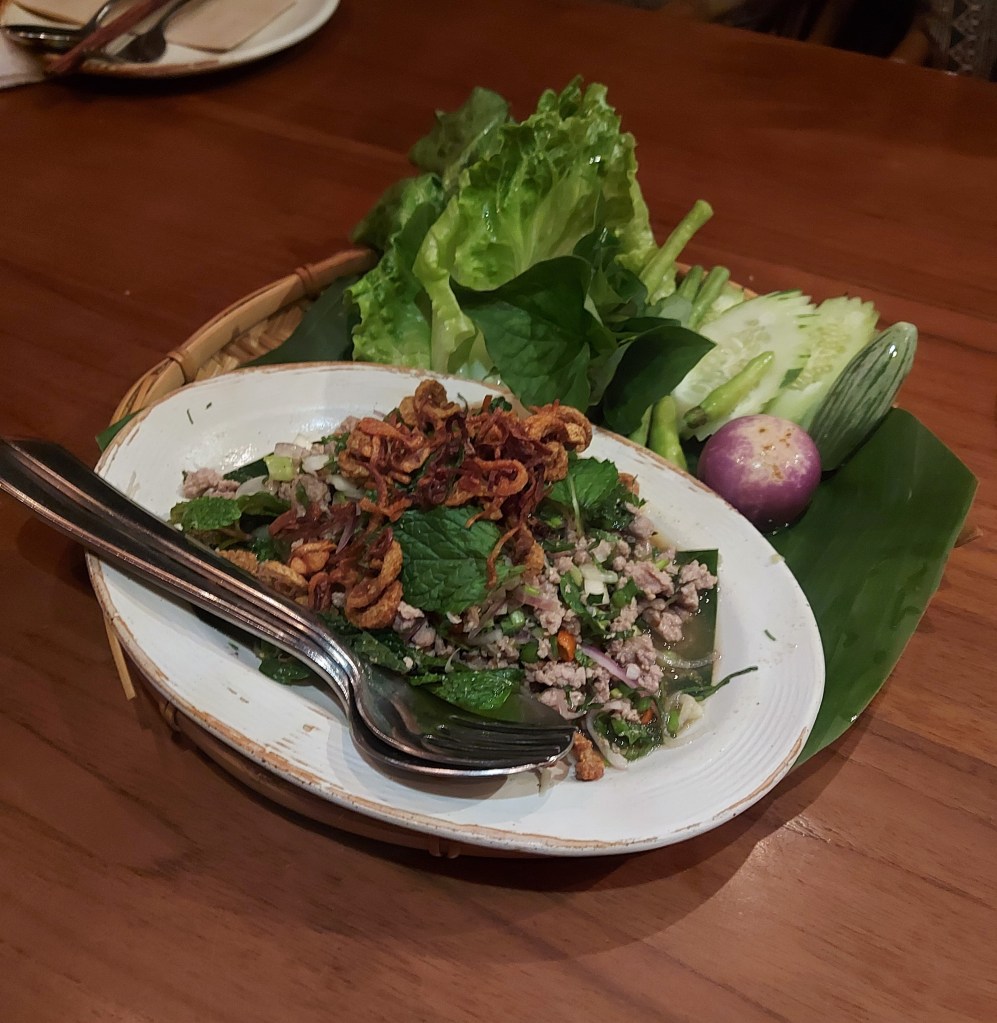
Laab recipe (owned by Tamarind Restaurant and Cooking School in Luang Prabang)
Ingredients:
- 150g buffalo or beef, minced (any meat or fish can be used)
- 1/2 teaspoon salt
- 1 teaspoon fish sauce
- 1 clove garlic, finely chopped
- 2-3 small spring onions, finely chopped
- 1 tablespoon coriander leaves, finely chopped
- 1 stalk lemongrass, white section finely chopped
- 1/2 cup mint, roughly chopped
- 1 tablespoon roasted sticky rice powder
- 1 tablespoon lime juice
- 1-2 chilies (to taste)
- 2 snake beans (or green beans), finely sliced
- 1 tablespoon fresh galangal, finely chopped
- 1 tablespoon dried chili powder
- Small handful beansprouts, blanched
Method:
- In a wok or pan, lightly sauté the meat with the salt and half the fish sauce.
- Remove pan from heat, and add remaining ingredients to combine.
- Serve with sticky rice and garnish with greens.



 The Foodscapes Collective
Leave a comment