

Eco2librium is a Kenya-based company that applies business solutions to solve social and environmental problems. In this interview, I speak with John Luseno, the Field Assistant Director, and Hardley Malema, Assistant Director, Office of Innovation. They share with me how Eco2Librium is using cotton textile waste as a soil additive to improve soil health and address the clothing waste challenge in Kenya.
Read The Foodscapes Collective article on this project here.

John Luseno
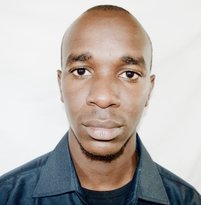
Hardley Malema
Joel: Can you tell me a little bit about Eco2librium and the textile waste soil additive for regenerative agriculture project?
Hardley: We are an environmental, conservation-based company and the office of innovation is tasked with coming up with new ideas that can be incorporated into our system. We’ve been looking around for some ideas on how to be able to handle the cloth waste, which is in surplus, you know, in our local towns. Here you will find in the bins, uh, so many clothes unattended to, being thrown by the river, by the roadside, and so we are looking into ways of reducing.
We realize that globally, we have around 92 million tons of textile waste annually, as of the 2022 article. You find that most of this ends up in landfill, some is incinerated, and so you’ll find that recycling is now becoming more common. And the upscaling of it is also growing and so you find that this discarded clothes can be recycled.
I can say our objectives are three. Whereby one is to assess the costs associated with the application of cotton textile wastes to farms in western Kenya. Two, to accurately and verifiably document the operational processes including full traceability of textile wastes. And three, to conduct field study on the effects of cotton textile waste on soil and yields. So those are our three main objectives.
Joel: Can you walk me through the process of turning cotton clothing waste into a soil additive?
Hardley: Yeah, we are working with local dealers around, we are working with some of the people in markets, just to be able to get these clothes. And so what we do is that we sort them out, to be able to differentiate only cotton cloths and other types of material including nylons and polyester, etc.
We are fully focused now on the hundred percent cotton clothes, and so once we get them from these landfills, from these markets and local tailors around, we are able to sort them by categorizing if they are cotton or not cotton.
First, when you’re cutting up, we also look at the labels to know what they’re made of and where they are from. For instance, “made in the U.S.”, “made in India”, “made in South Africa”, etc. So we are also able to map out based on the waste, where most of the waste is coming from. We have good maps that show the data collected and where are source of origin of these clothes.
We are also able to remove, you know, the zippers, buttons, etc., before shredding them. We are able to weigh [it], then we move forward to shredding.
So after shredding, we get them into small pieces. After that, we are able to soak [the cotton] up a bit, just to be able to see if we can get out any toxic substances. Before now composting with other materials available to be able to make a soil amendment product.
Joel: How long do you soak them for?
Hardley: Yeah, we do that once and it takes between 14 days.
Joel: What happens next?
Hardley: Then we come up with a soil amendment, whereby we mix with other organic materials to enhance the composition, manure around from farmers, you know, wastes that can be decomposed such as leaves, uh, sugarcane etc.
Joel: Have you added it to a field yet? And do you have any results?
Hardley: Yes. We’ve been able to also add up some biochar and work with at least 30 farmers on the last planting phase. We realized that the composition was well in order and farmers noted some significant increase in their yields. We were also able to look into soil tests to see if there’s any toxicity affecting the soil of the plants and the results showed there was none.
Yeah, so you realize that farmers in the western part of Kenya have a challenge of accessibility of fertilizer due to high costs of fertilizer and reduced income. Because you realize that most of the farmers get a really low income, so they would like to save more from their earnings. And so this total textile additive project is becoming really handy for them and they keep on calling and asking how far we are with the final soil amendment products.
Joel: How did you learn about this?
Hardley: Yeah, so you find that first a trial in Goondiwindi, in Queensland, Australia, showed that it is possible to divert large amounts of cotton textile waste from landfill to agricultural fields. And so this provides benefits to soil health and it’s a scalable solution to the massive global problem of textile wastes.
Joel: That sounds amazing! Do you partner with any other organization on this project? And how is it funded?
Hardley: Eco2 is currently footing all the costs 100 percent, but in the long run, we’ll be able to also register this as a carbon project, and so we’ll be able to subsidize this a lot to the farmers. We are also having a partnership with one of our partners called Fabricure, who are also playing a very good key role in advising and sharing ideas.
Joel: Thank you for sharing this. John, to bring you into the conversation, how does this sustainable agriculture project fit into the forestry and energy initiatives that Eco2librium is doing?
John: Actually, it’s very important for us. You see, Eco2 has been doing Stove4life project for a long time as a carbon project. But the major objective was to make sure that we are trying to protect the Kakamega forest, being one of the old tropical rainforests. So it was very important for us now to put the minds of the community to understand [the forest] is a very important natural resource that is supposed to be protected. But now, coming to the recycling of fabrics and creating an alternative product, actually, it is a real concern because this is a connecting activity.
You see, people are now supposed to think closer to what they have. But people don’t really understand [cotton textile waste] can be transformed into something that is very important. They can be sorted and then used as a product in our farms. So it’s something that we are now bringing in for people to understand.
We need to bring in an alternative on farm because farming in Kenya is the backbone of the country. Each and every one within the country is depending on farming. How can we make them get a product that is affordable from whatever that is actually at their disposal. Because you see, fabric is all over, but when we need in plenty, then we need to look for other sources. But these people, they need to think of how can we utilize our waste to make sure that we are getting a product that is going to be also useful to our crops and other plants.
You know, with regenerative agriculture, people are going to plant different food, different crops, and this different crops is going to improve their yield. By improving the yield, it means that it’s improvement of economic standards of the people. So they are going to have enough money to make them to be sustainable, at the same time, we are going to have money that’s going to be generated through the carbon project, since the carbon is going to be maintained, you see, and you’re going to reduce the amount of carbon within the air.
This is something that we are now coming in to make sure that the company is now bringing in this household as a partner, to make sure that it’s trying to utilize the available resources to have a product that is going to improve their life.
So this is the role of the company that’s now doing it, so that we are able to care out for the environment, as well as to utilize this waste that is well known as waste, so that we can have a very good farming system and the improvement in terms of economic.
Hardley: Yeah, and also to add to what John said, I think it’s important also to reiterate on the carbon and sustainability goals, by carbon footprint reduction. That will also aim on our broader goal, as well as circular economy integration. Whereby the cotton textile project really aligns with circular economic practices, you know, by collecting used textile and repurposing them into new products
Joel: How does Eco2 engage local communities and smallholder farmers in adapting and adopting these practices?
John: We have worked with the communities from the initial projects. So we are trying to organize for focus group discussions. This is a discussion that we are now bringing into farmers to come in and discuss. We actually explore and discuss the issues in terms of our product and how to use fabrics as one of the organic manure that’s going to be available to the farmers.
So it’s something that we now organize for focus group discussions. At the same time, we have outreach programs, like we reach to farmers, to also understand what they are doing on the farms and how their farms are doing. That is depending on, in terms of data collection, there’s a lot of field work that has been done to make sure that we are meeting the farmers, discussing with them and seeing particularly what is happening on the ground.
The other thing is that we also do some research in terms of communication online, mobile calls, by discussing with these people, understanding what are their needs, and how they are doing it and what that they propose to do. That’s the collection of information and also carrying some interviews and so on. So that is how Eco2 is now coming in to interact with the farmers because these are the people, we have had them in our long-term network.
Hardley: Yeah, and so also to add on what John said, is that our energy efficient cookstove project has a network of, you know, at least 800 people that we are working with, having installed over 180,000 stoves. So we would like to use that synergy and use the available people to integrate this.
And as John rightly mentioned, is that one of the ways that we are doing now is by creating awareness and capacity building. Whereby we are organizing focused discussions, we will also organize a workshop to educate farmers on the benefits and proper application of cotton textile waste in farming, including soil health, crop yield improvement and cost savings.
We will be able to integrate this into agroforestry, whereby use of cotton textile waste as part of the planting process for agroforestry initiatives.
And we are also providing economic empowerment whereby cost effective farming inputs, the cotton textile amended products, you know, will act as a free or local input to farmers reducing the dependence on expensive fertilizers that are currently ongoing.
Lastly, John also mentioned on data collection and this is just to be able to measure on monitoring and impact assessment, whereby regularly monitoring the use of cotton textile waste impact, soil quality, crop yields and farmer incomes. And so the feedback loop will be together in the integration process and address any challenges.
Joel: This is some amazing stuff. It’s really inspiring. What are your plans for the future?
Hardley: I would say what we’re looking for, what the future is and what you’re doing now to attain our goals in the future is one, proof of concepts. Whereby we are coming up with the demo farms, you know, looking into this cotton additive project or the cotton additive soil amendment products. Whereby we can be able to show the world and show the farmers on the success story behind it. So that becomes our proof of concept. So we have different farms at different areas in the western part of Kenya, just to be able to be part of our success story. Because if you see what we are doing and seeing there’s not any negative impacts, it will be a good plus for us for adaptability.
Two, we are doing more of awareness creation like I had mentioned. So that people can be able to, you know, to listen to what we are doing. They can be able to know this is possible and support the process.
Last but not least, we are looking into circular economy integration. And I can narrow that by saying recycling and upcycling, whereby we are looking forward to expanding technologies and processes to recycle cotton textile waste into new fibers. Into new fibers and into a good soil amendment products.
John also mentioned this, our goal is sustainable agriculture, regenerative agriculture. Whereby using cotton textile waste as compost, you know, or mulch, to enrich soils in farming.
So regarding sustainable agriculture, we’re talking about soil health improvements. Whereby using this soil amendment products to enrich soils in farming and improving long-term soil health.
Joel: Do you guys have any plans for the non-organic clothing, such as the nylon and polyester products?
Hardley: Yes, um, that’s a good one, Joel, and so we are collecting everything. We need to look into working with this and so our goal is, we are trying to make briquettes from the other polyester, etc, and to see how that will come out. And so we’re still in the trial phases and we’ll be able to address once we have a final product.
Joel: Is there anything else you would like to share?
John: In summary, we are looking into developing a product. This product is supposed to solve a farmers issues, in terms of affordability and improvement of agriculture. Out of this, if we have a product, then it means that it is going to be adopted. After it being adopted, it means, there is going to be a very strong bonding between the company and the farmers. So at the same time, there’s going to be a very big recognition between the company and on a national level. This is an intervention where we are thinking that if this practices now become very active, which means there is a lot of adaptability and there is a lot of changing in a farming system and a way of life.
Now we are going to use the recycling of waste, that is going to be key, because it is something that is now becoming very pertinent and very vital in terms of our understanding and how to use it in a sustainable manner. That is the thing that we are looking into, so that we can actually stand out, because this is the initial project that is being done in Kenya. None of the practices have been done, fabric waste recycling, it is the only practice that we are trying to come in, as the only company in Kenya.
Hardley: As you know, one of our goals at Eco2 is always about people, planet, profit, and purpose. That is achievable through climate and environmental goals. Using cotton textile as a carbon offset project can be using cotton waste in ways that contribute to carbon sequestration, such as soil enrichment products.
When we come up with expanding infrastructure to divert cotton waste from landfills, it will reduce landfill dependency and reduce greenhouse gas emissions.
Finally, the future of cotton textile waste presents a remarkable opportunity to bridge sustainability, innovation, and community impact. So by embracing circular economy principles, empowering smallholder farmers, and leveraging cutting edge technologies, we can transform waste into a valuable resource that fuels environmental conservation and economic growth.
Together we can pave a way for a greener, more equitable future, where nothing goes to waste, and every resource contributes to the planets health and prosperity.
Want more content like this? Subscribe below to be the first to know.



 The Foodscapes Collective
Leave a comment