
A project led by the Faculty of Agronomy (FAGRO) at the University of the Republic Uruguay is advancing techniques for managing reduced tillage systems in organic farming. Known for its many benefits for the environment, reduced tillage is a technique used by farmers to improve soil health and crop yields, but it comes with challenges that this project aims to address.
In conventional farming in Uruguay, tillage is commonly used to prepare soil for planting. This involves machines that dig and mix the soil to improve airflow and moisture, uproot weeds, and integrate fertilizers. However, in the past decades, research has found that tillage is a major driver of soil degradation by disrupting nutrients and organic matter present in the soil.
In comparison, reduced tillage is the practice of minimizing soil disturbance and has demonstrated many benefits for the environment by improving biodiversity and wildlife habitat, water conservation, and reducing soil erosion.
Despite these benefits, reduced tillage poses hurdles for farmers, particularly due to increased weed growth. Weeds compete with crops for resources, and managing them organically is often labor-intensive and costly.
The overall goal of the reduced tillage project at FAGRO is to introduce reduced tillage on family farms, but their biggest challenge is investigating the conditions needed in a reduced tillage system to decrease weed growth without using chemical herbicides that pollute soil and water.
Collaborating with local farmers, agriculture advisors and research institutes, the team is conducting several ongoing experiments to find effective practices to control weeds in reduced tillage systems.
One promising approach is the use of cover crops – plants used to cover and protect the soil. Cover crops have been shown to suppress weeds, improve soil health, and reduce erosion. Some of the initial conclusions not only show promising results of reduced weed growth, but also show that participating farmers are in the process of implementing these practices on their own farm.
By integrating innovative techniques and farmer collaboration, this project is paving the way for more sustainable farming in Uruguay.
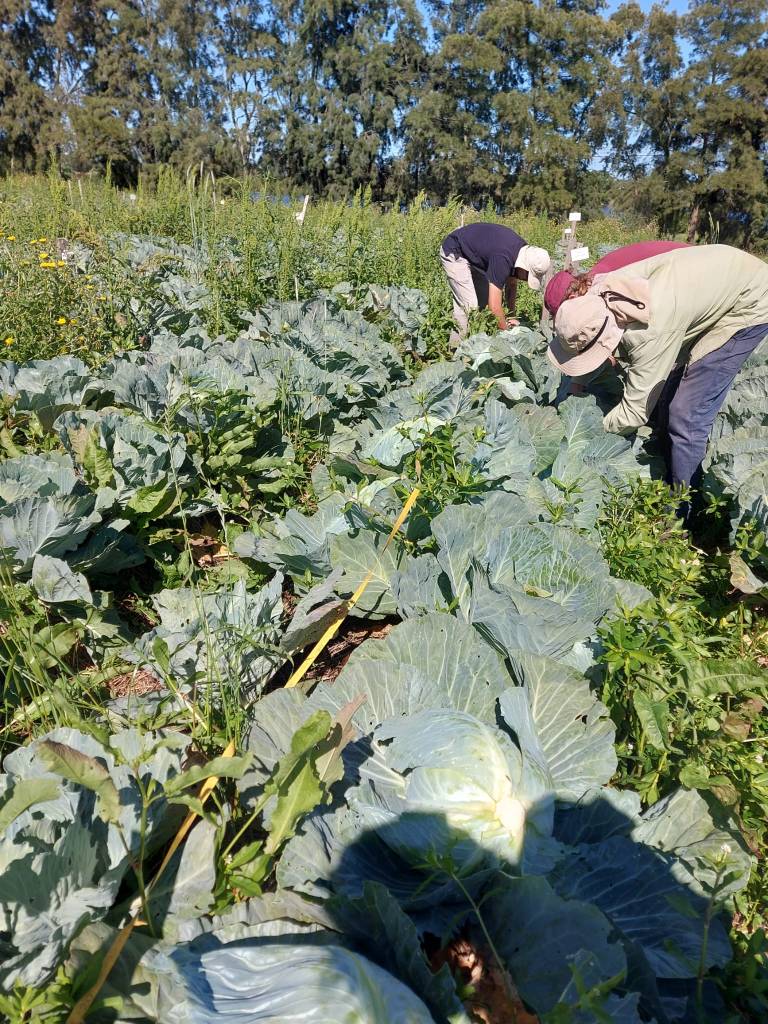
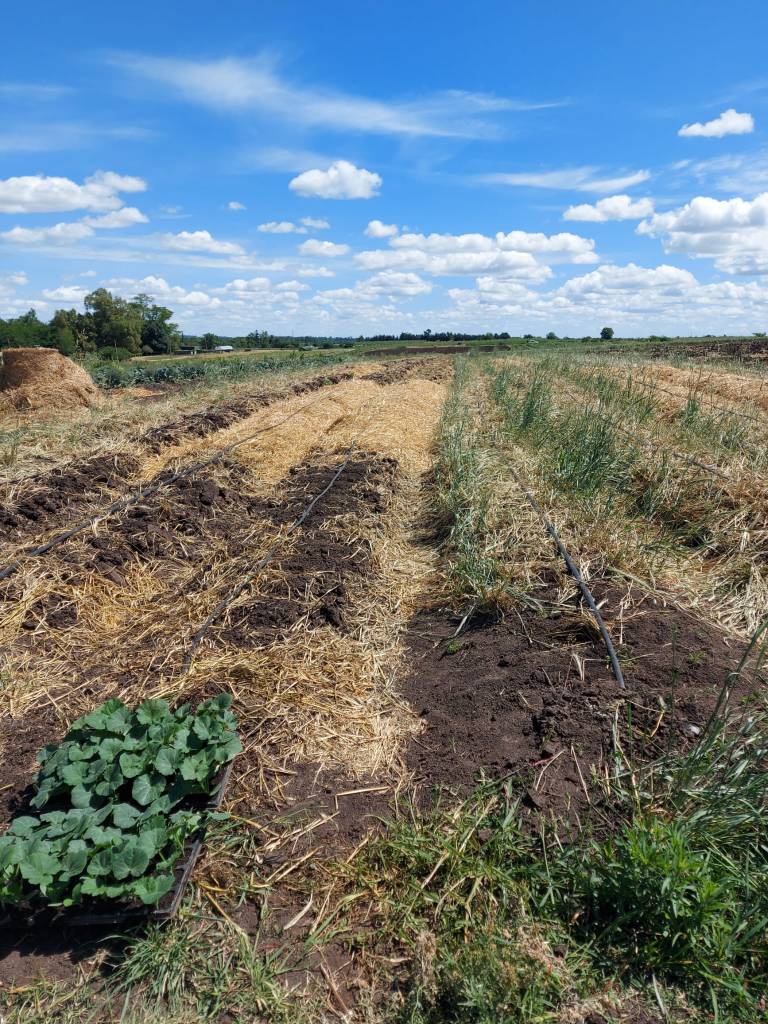
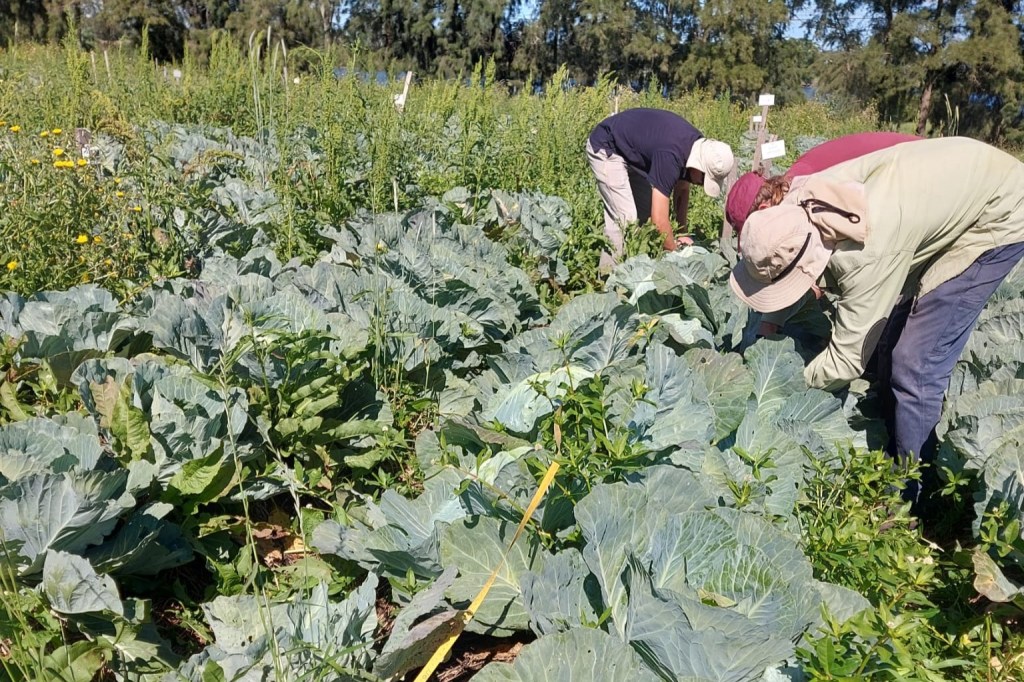
Image 1: Harvesting cabbage at the Centro Regional Sur, Canelones, Uruguay
Image 2: Applying different applications of cover crops to the experimental plots in Canelones, Uruguay





 The Foodscapes Collective
Leave a comment